
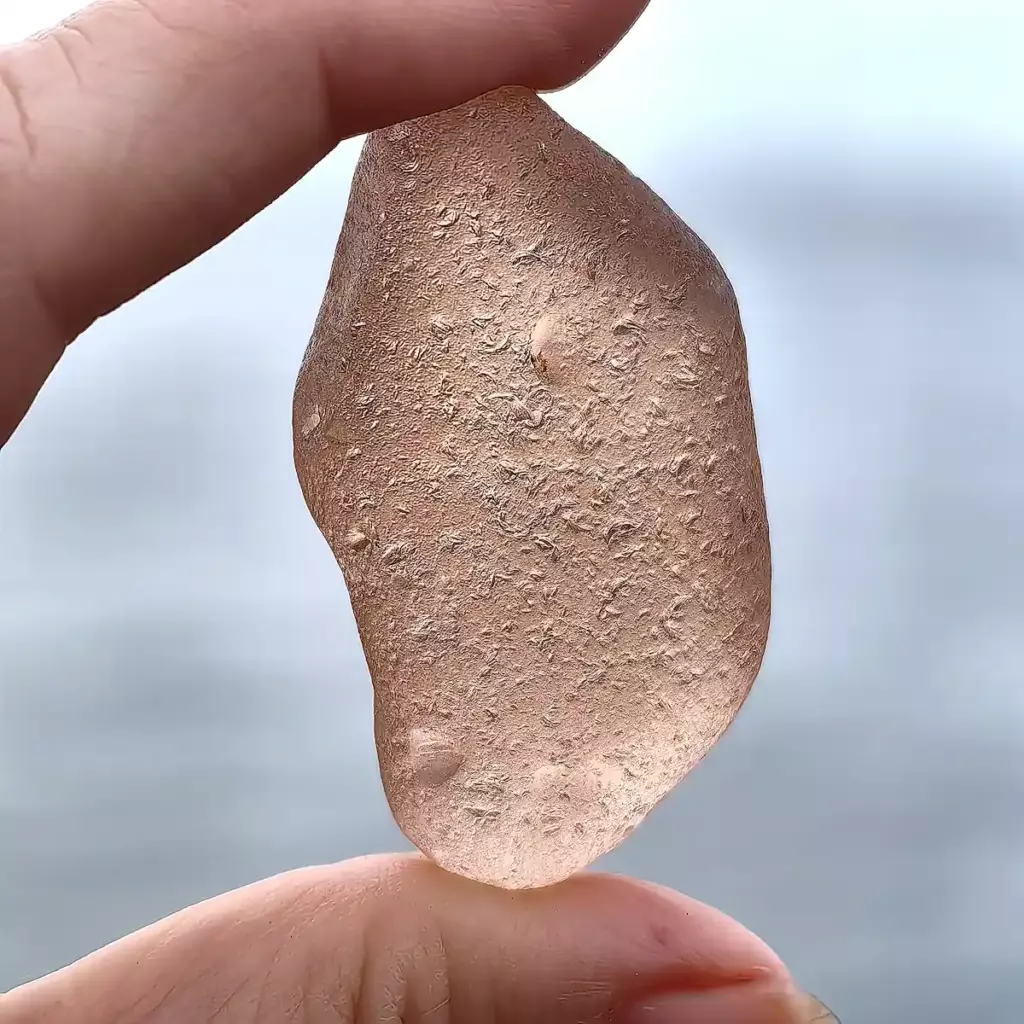
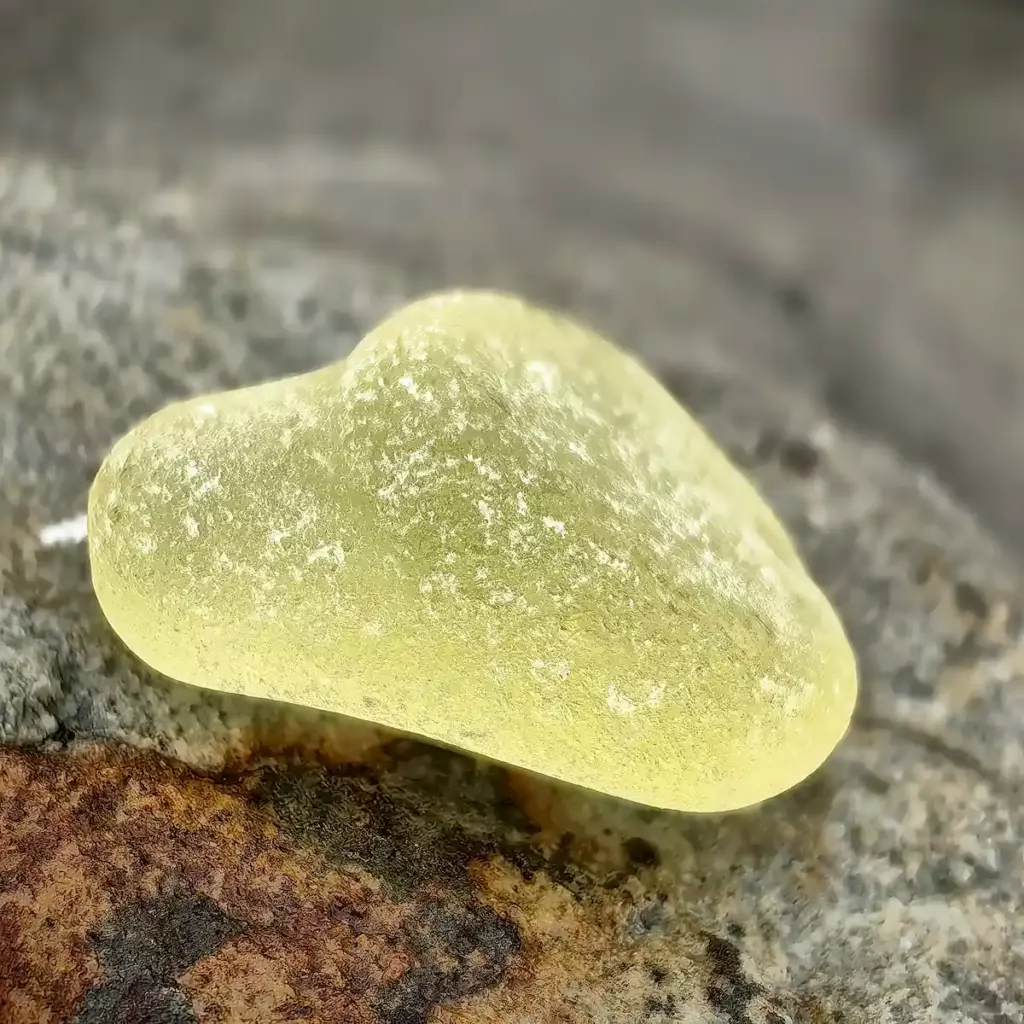
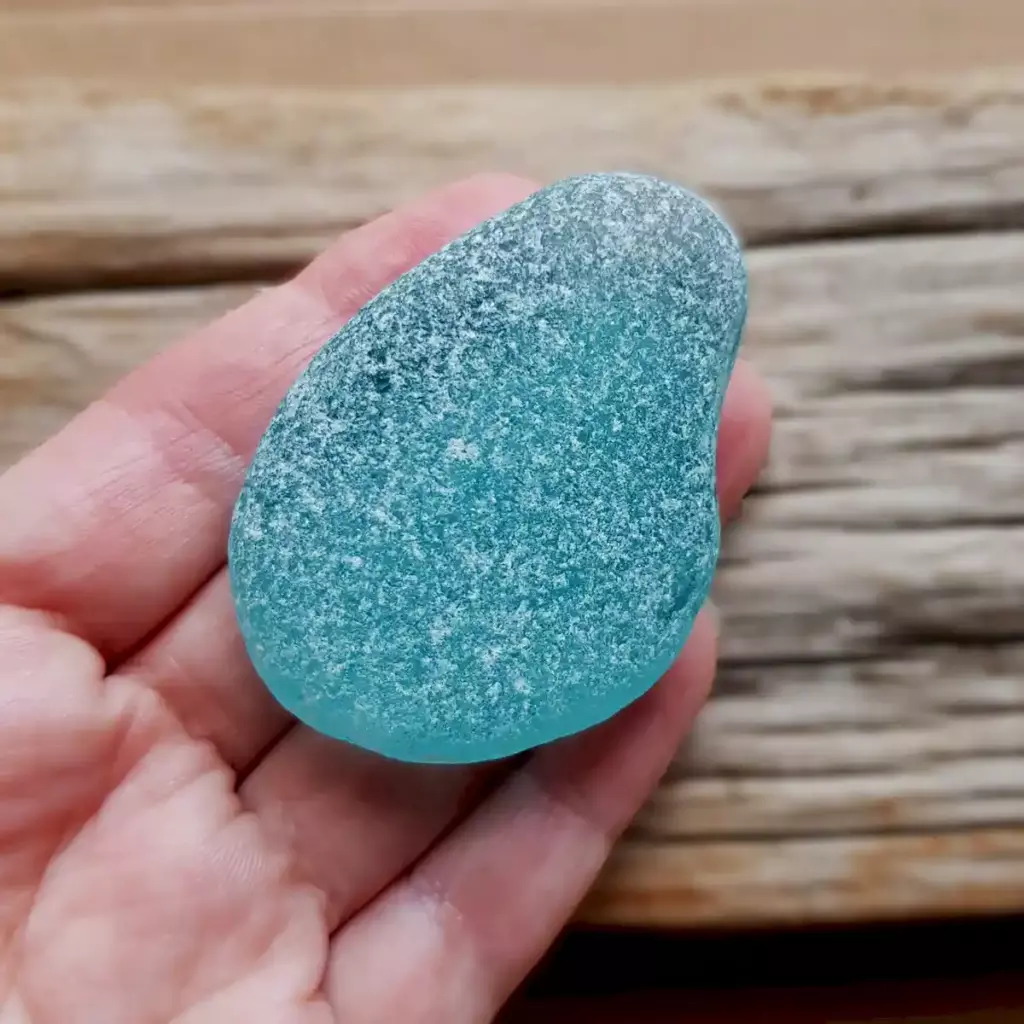
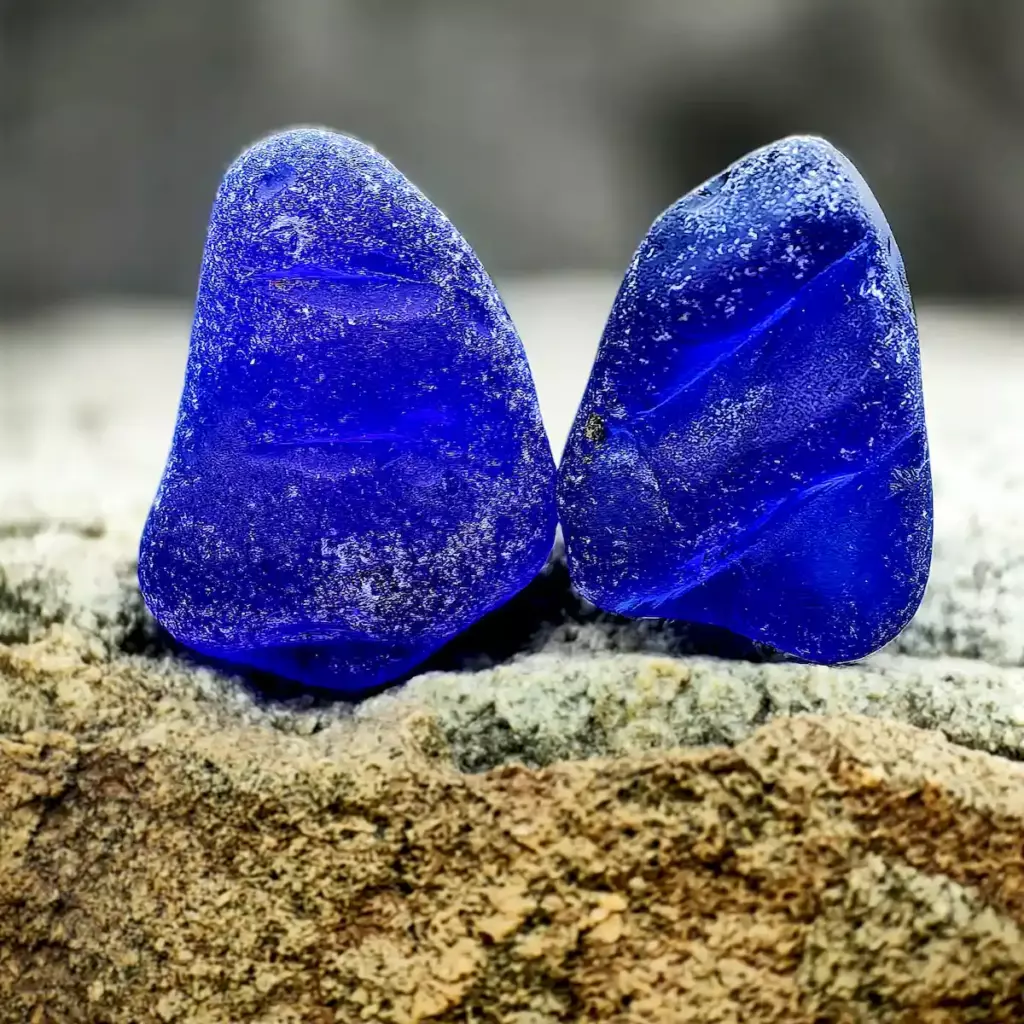
Pick up a piece of genuinely well-aged sea glass: it feels less like a broken bottle and more like a dense, velvety, perfectly weathered gem. To a materials scientist, this texture isn’t just luck-it is the result of a massive coastal laboratory where violent ocean storms, abrasive sand slurries, and molecular corrosion work in tandem over decades.
However, not all sea glass is created equal. While shards from warm, sandy resort beaches often develop a smooth, semi-glossy satin finish, the treasures washed ashore on Vladivostok’s famous Glass Beach in the Sea of Japan are entirely unique. The brutal sub-zero climates, high-energy Pacific surf, and sharp volcanic sands create a thick, deeply tactile “suede-like” frost that cannot be replicated anywhere else on Earth. Behind this unique northern coastline frost lies a complex interplay of physics and chemistry, making authentic Russian sea glass a rare find that serious collectors actively search for to expand their historical collections.
Table of Contents
1. Mechanical Erosion: How the Surf Smoothes Glass
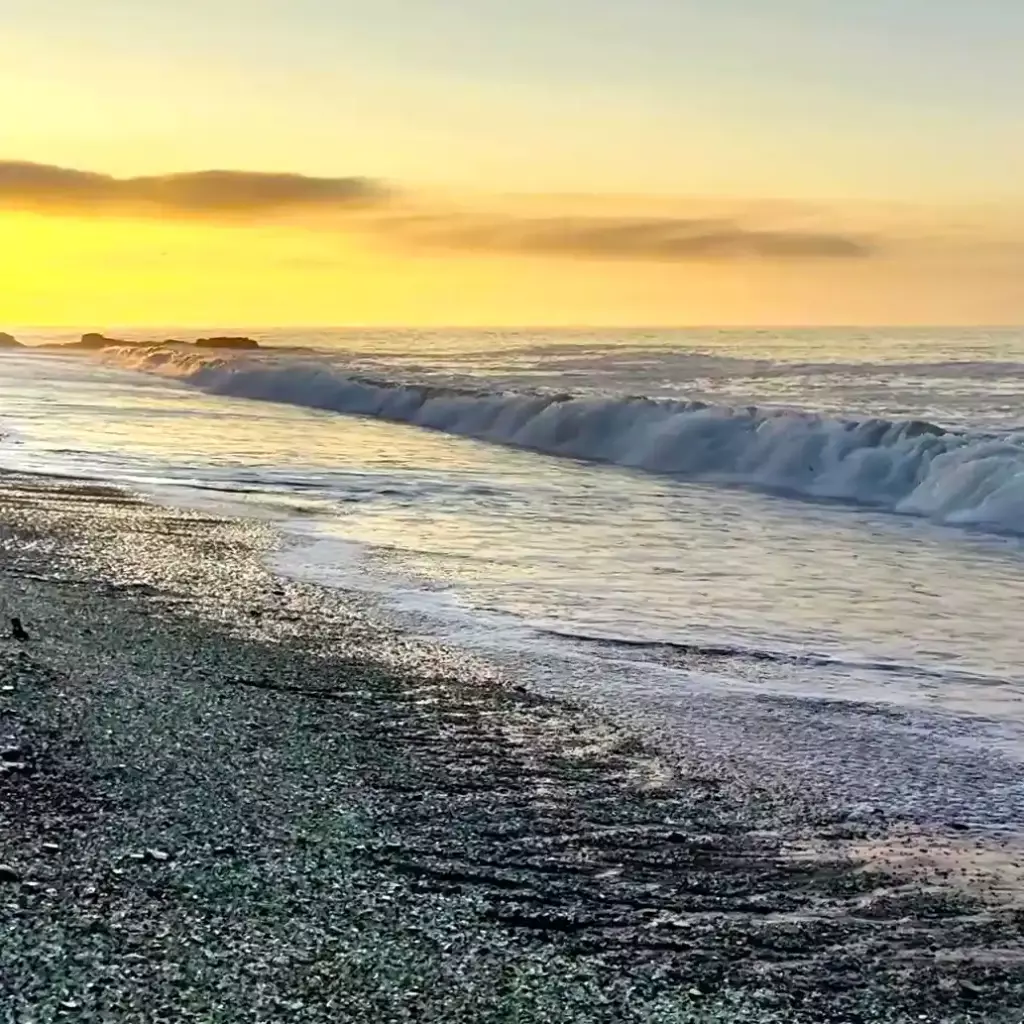
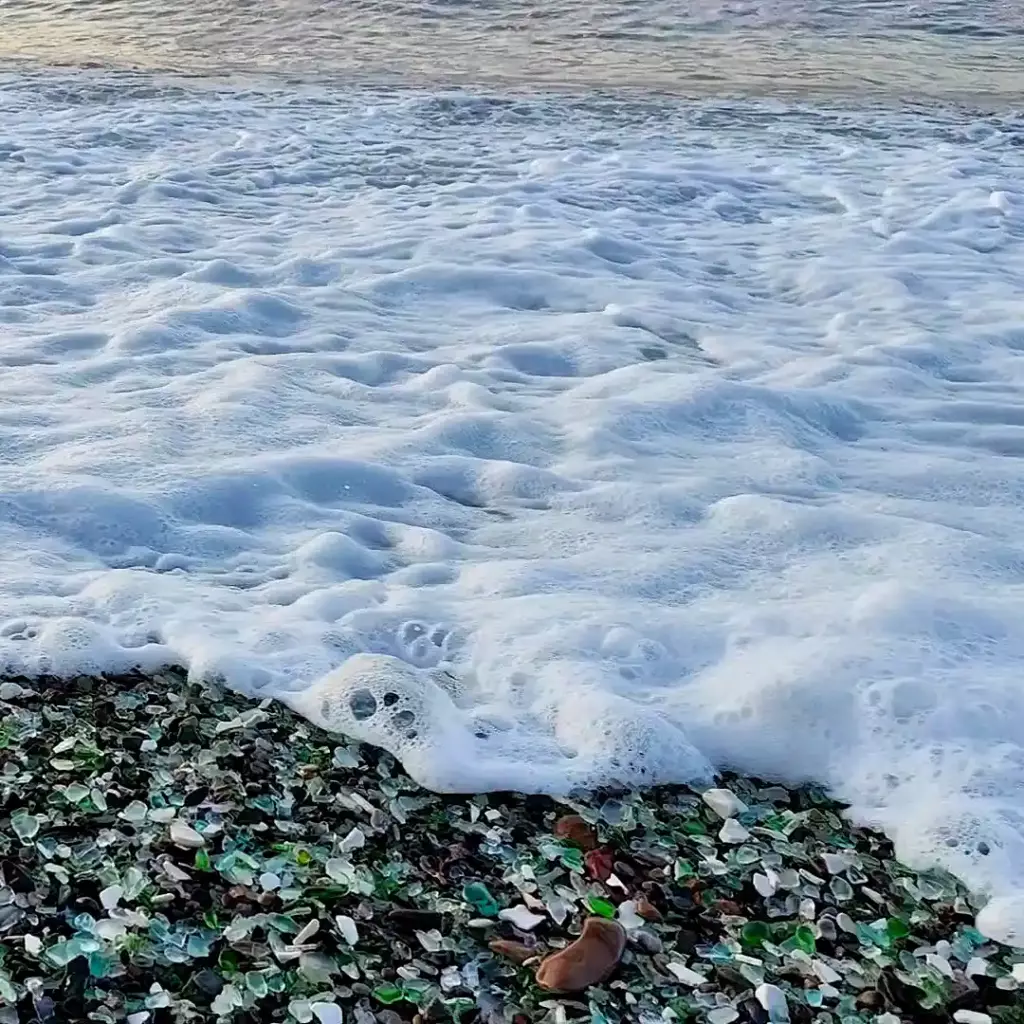
The ocean doesn’t smooth glass with water alone. In the breaker zone of Ussuri Bay, high-energy physical forces are constantly at work, functioning as a high-velocity lapidary mill that behaves completely differently from calmer global coastlines.
Why Does Russian Sea Glass Have a Unique Texture?
As brutal Pacific waves break onto the Glass Beach shoreline, they drive raw shards up the volcanic beach with immense hydrodynamic force (swash), before gravity drags them back out into the deep (backwash). In this endless cycle, sharp edges are continuously rolled and flipped against the coastline, blunting jagged corners into a soft, aerodynamic form.
Liquid Sandpaper: The Power of Sediment Slurry
Seawater in the Sea of Japan carries a distinctly heavy, highly abrasive medium composed of quartz sand, coarse gravel, and sharp basalt and feldspar grit from the local volcanic cliffs. Driven by wave energy, millions of these abrasive grains impact the glass framework every minute. This sediment slurry acts as a natural scouring agent that gradually grinds down hard facets, shaping the raw material into smooth contours over decades.
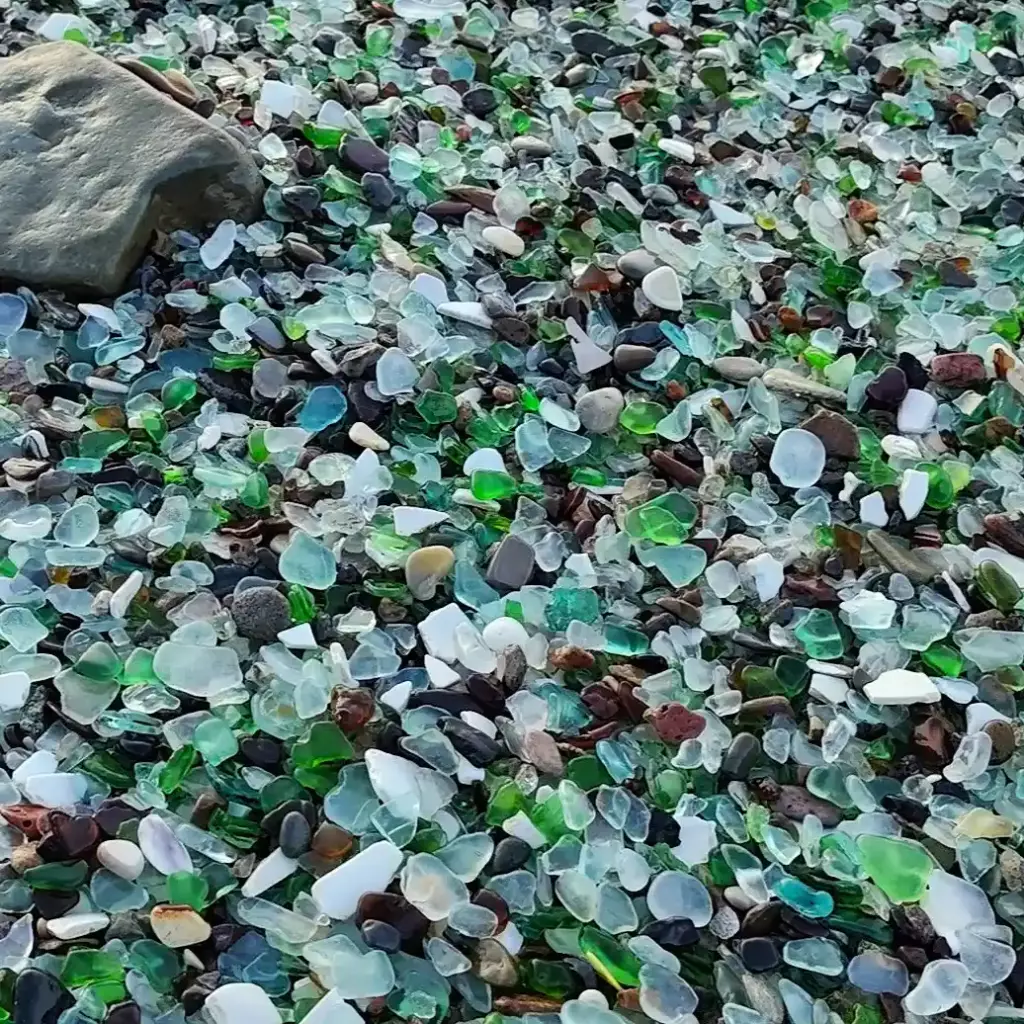
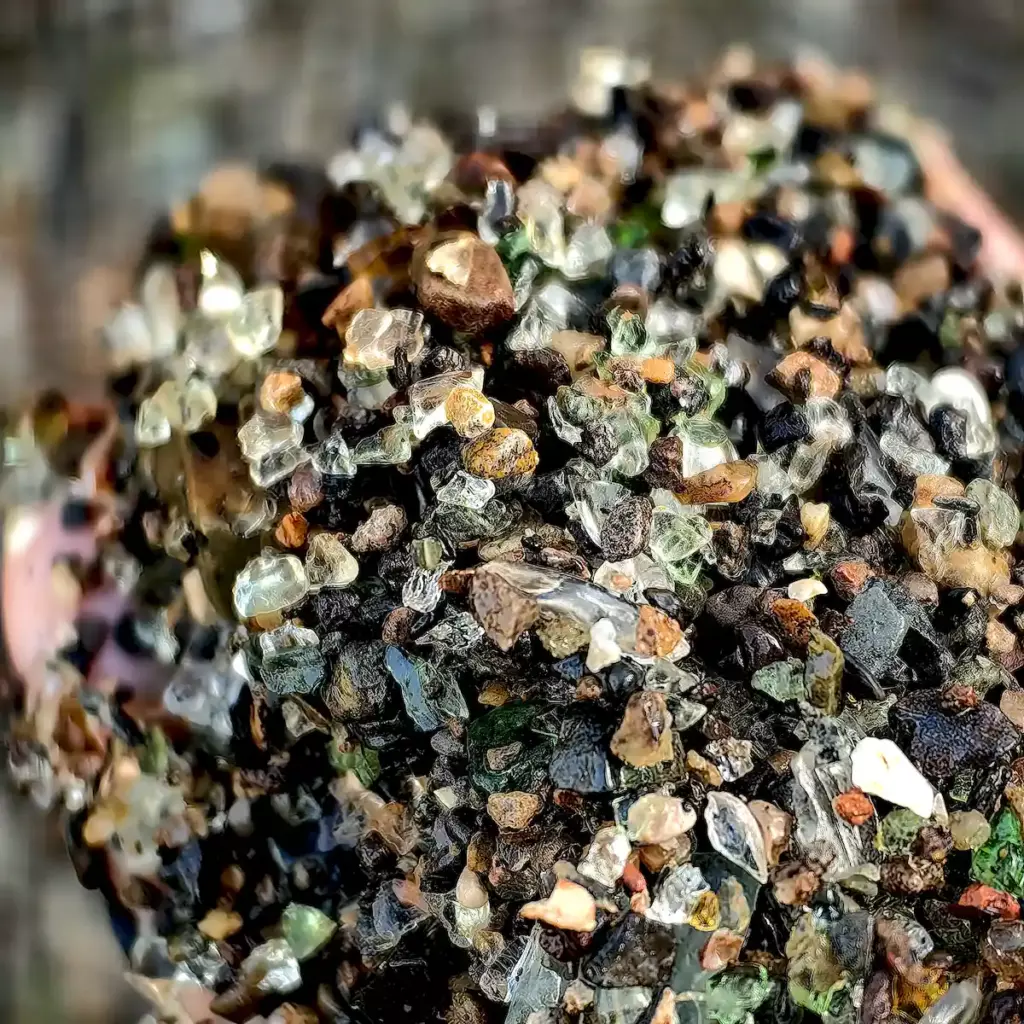
The Chemical Weathering Cycle: The Continuous Closed Loop
When evaluating the authenticity of vintage shards, a defining question among collectors and modern gemological guides is how the northern ocean achieves such a deep, uniform matte finish. The answer lies in a continuous, multi-decade chemical cycle that is heavily accelerated by the cold water temperatures of Ussuri Bay.
Seawater gradually leaches soda out of the glass surface, making its outer skin brittle and soft. The heavy Pacific surf and abrasive volcanic sand easily strip away this chemically weakened layer.
As soon as the weathered crust is washed off, a fresh surface is exposed, and the ocean repeats the process. This continuous closed loop ensures that genuine Russian sea glass develops its characteristic heavy, ultra-matte texture.
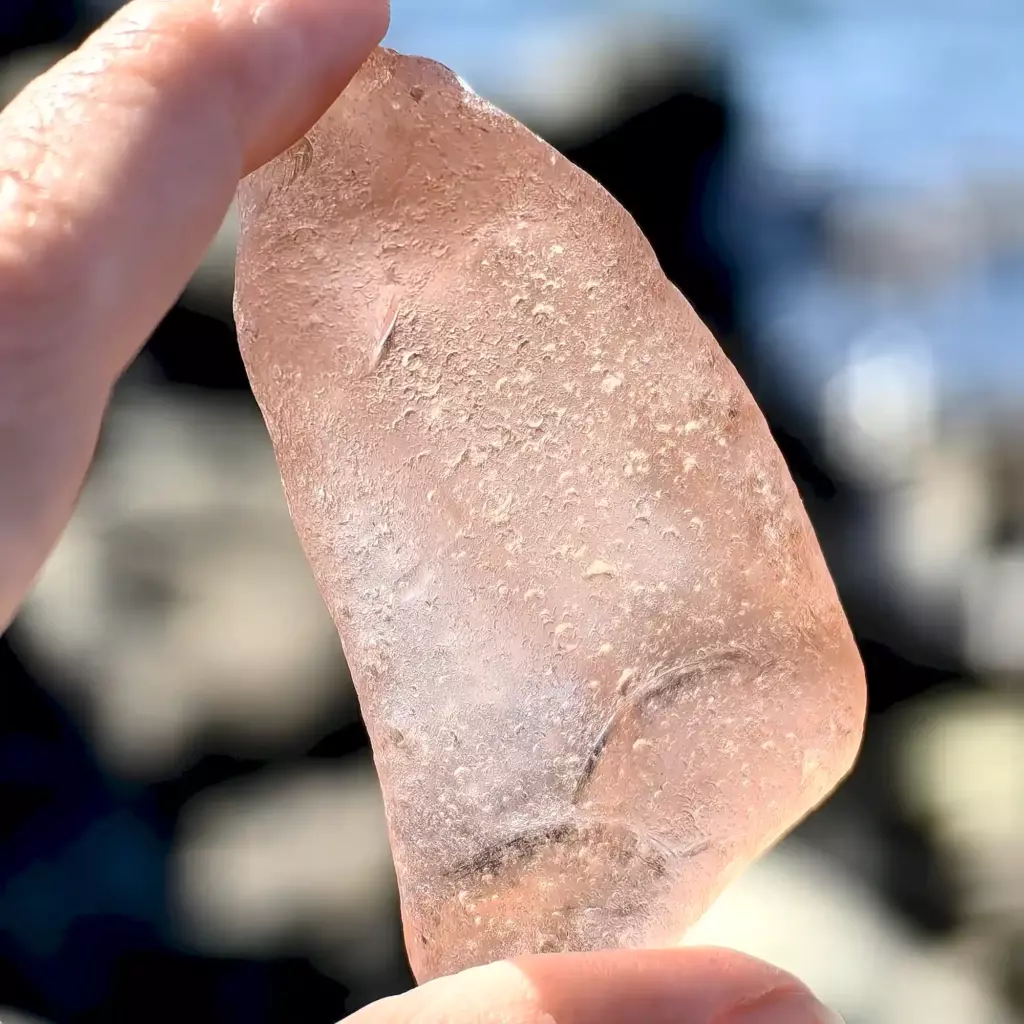
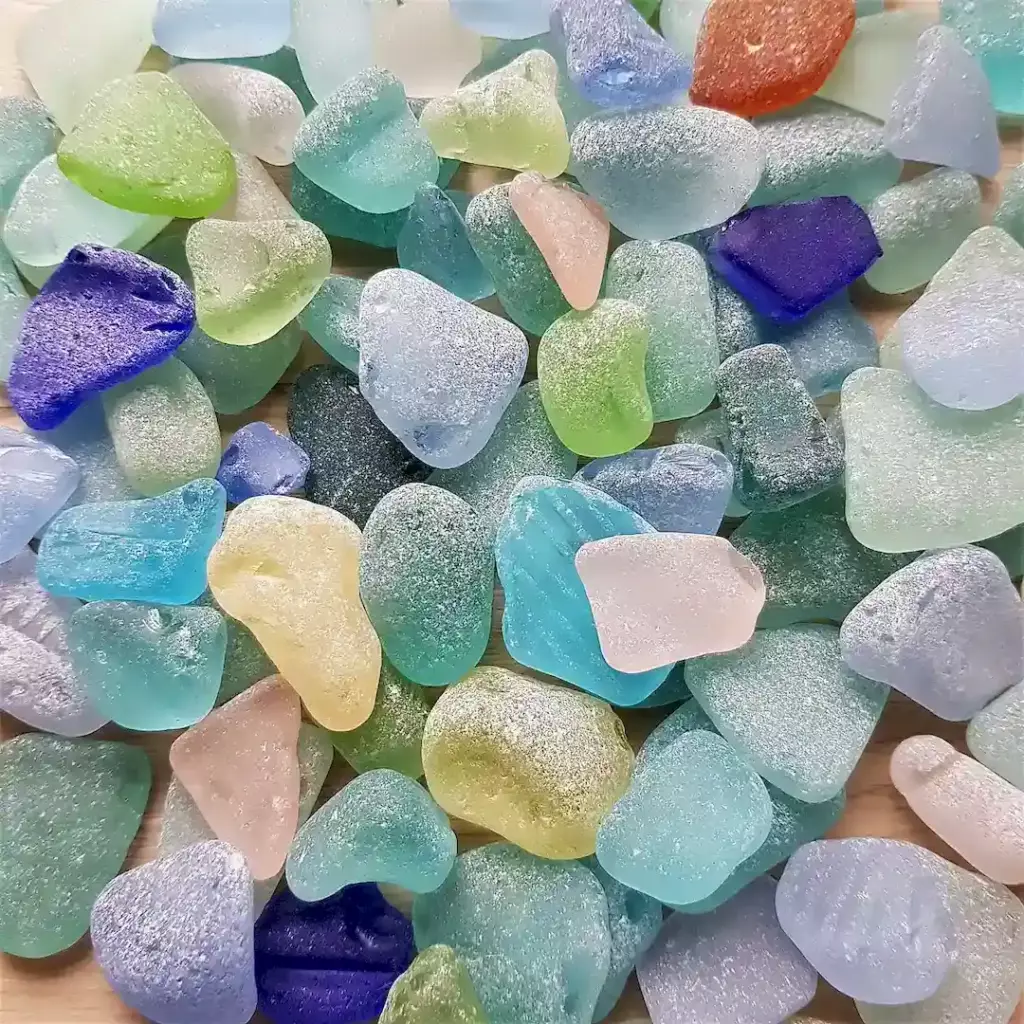
To explore the raw, tactile results of this intense natural tumbling process, feel free to browse our verified collections below:
2. Chemical Vulnerability: How the Sea Alter Glass From Within
While the surf works on the outside, the unique marine environment of the Sea of Japan performs deep chemical alterations within the glass framework. The vintage Soviet bottles, jars, and apothecary vials that once lined our coastlines were made from classic soda-lime-silicate glass, a material composed of three primary ingredients:
- Quartz Sand (SiO₂): Forms the resilient silica structure.
- Soda Ash (Na₂CO₃): Added during manufacturing to lower the melting temperature.
- Limestone (CaCO₃): Added to impart vital water resistance and stability.
High-temperature melting converts these ingredients into oxides. Inside the finished glass framework, sodium and calcium particles are held only by weak bonds, creating a natural, atomic-level vulnerability.
Because these sodium particles are so loosely tethered, they become the primary target for the aggressive Pacific marine chemistry the moment the glass hits the waves. This structural weakness triggers a continuous reaction with the saltwater – a process known as chemical leaching, which behaves completely differently in the sub-zero winter currents of Ussuri Bay compared to tropical waters.
Why Does Russian Sea Glass Retain Its Color So Well?
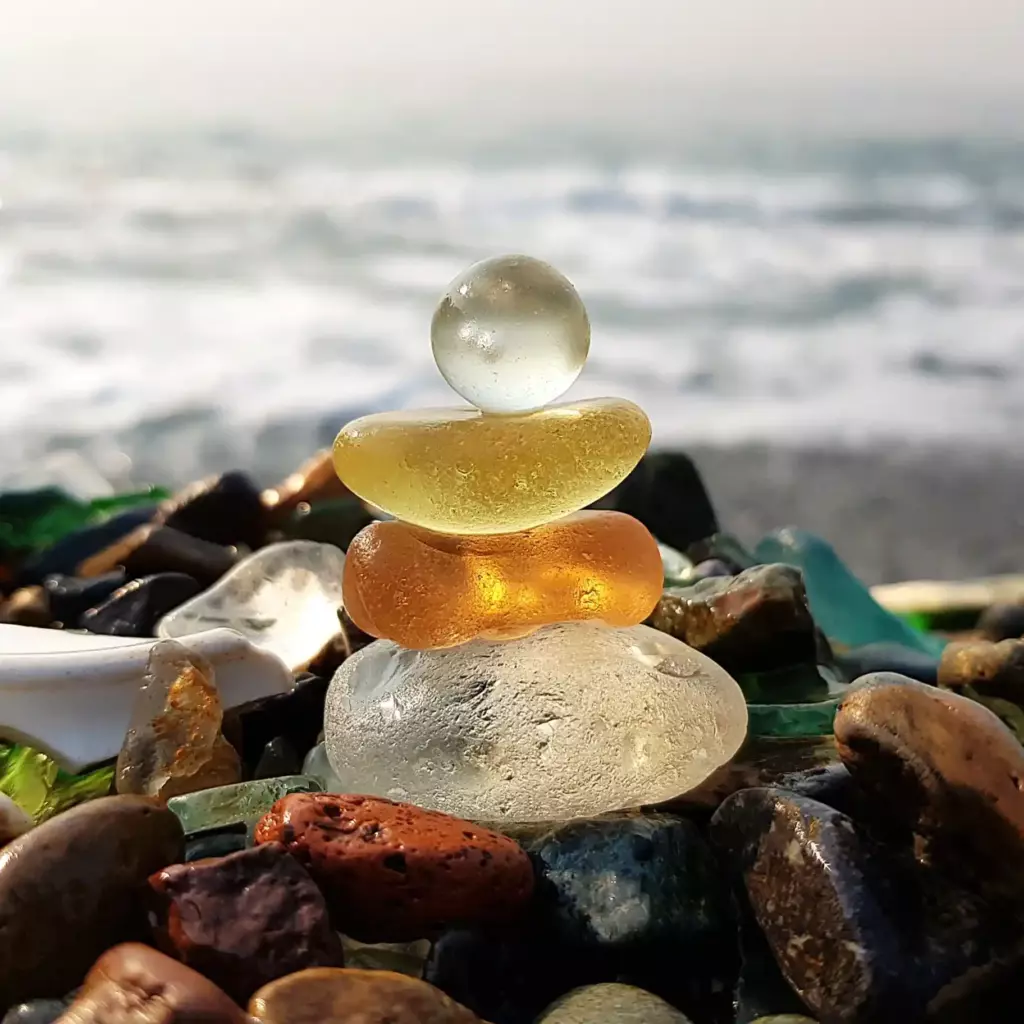
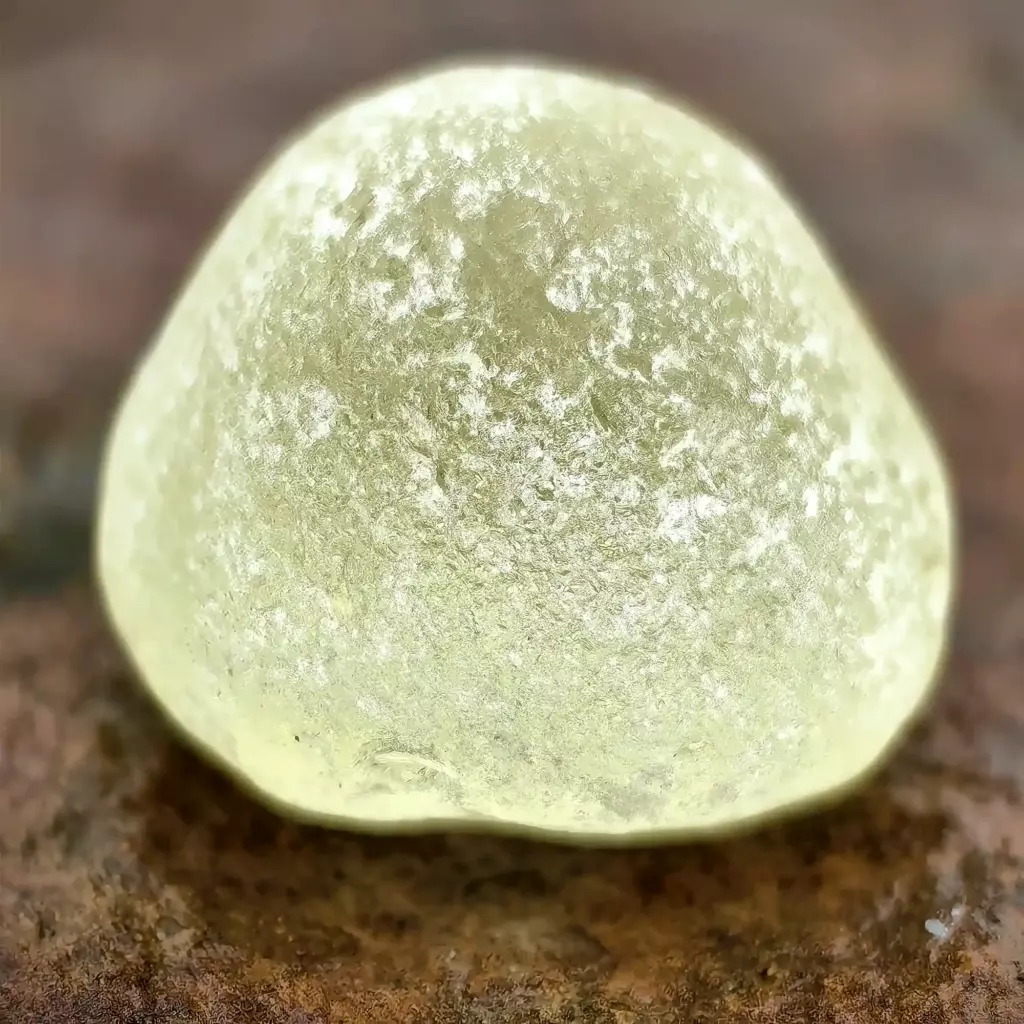
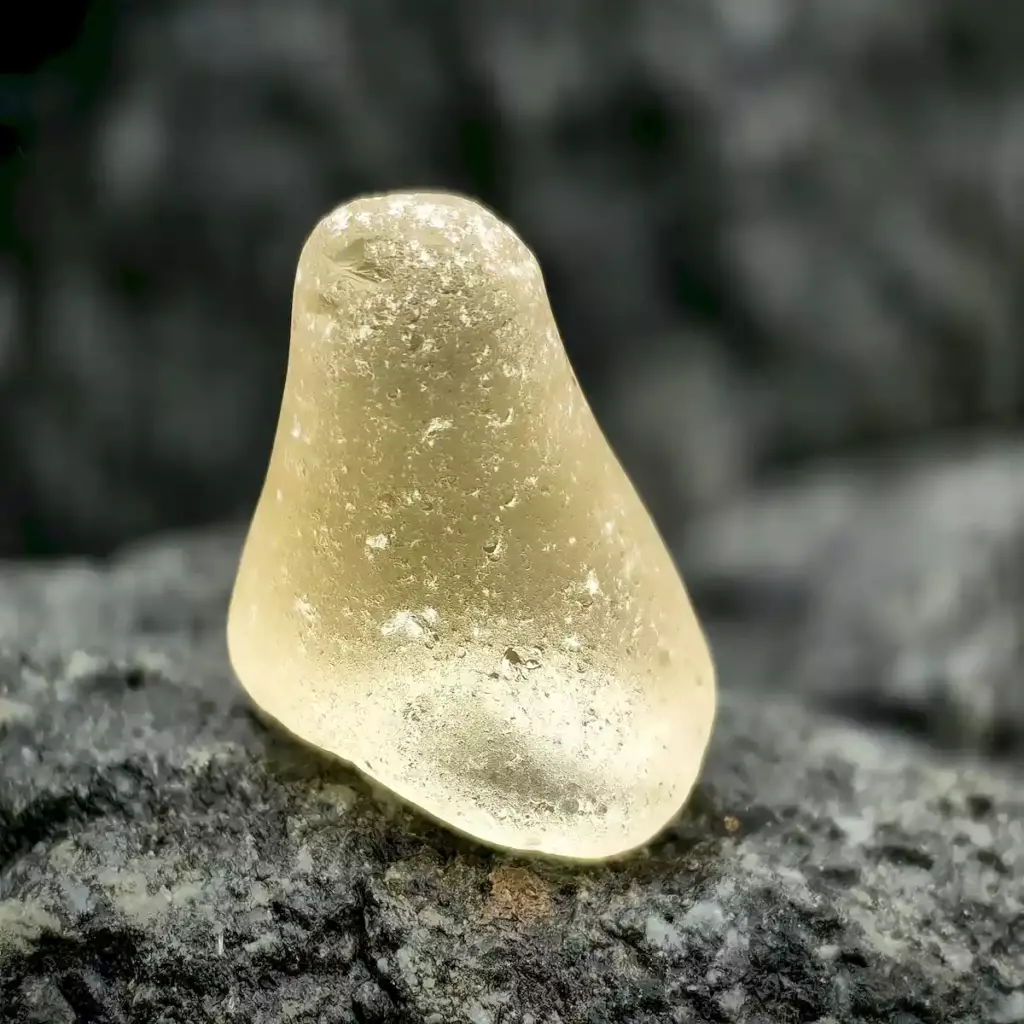
Due to the heavy, thick-walled production standards of the mid-century Soviet era, these vintage pieces had a higher chemical density than standard modern glass. This high durability creates a slower, incredibly uniform leaching process. It allows the glass to develop a deep matte frost while perfectly sealing its inner core. (To see how this specific chemical purity preserves its color over decades, you can read our case study on Sunlight in the Surf: The Magic of Russian Yellow Sea Glass).
Thermal Shock: The Northern Sea Factor
Harsh sub-zero winters complete this natural weathering process – a phenomenon entirely absent from warmer, tropical beach environments. Seawater trapped inside the microscopic surface channels and tiny voids of the outer skin freezes and expands during low tides. This intense ice-wedging fractures the surface layer from within, producing a deeply textured finish that clearly sets genuine Russian sea glass apart from fragments found in warm, gentle waters.
Watch the Northern Winter Factor in Real-Time
To truly understand how sub-zero temperatures sculpt this unique material, you don’t have to just imagine the physics. Watch our exclusive coastal footage from Vladivostok’s winter beach, where genuine historical fragments are frozen directly into the Pacific ice during low tide, triggering the intense micro-fracturing process:
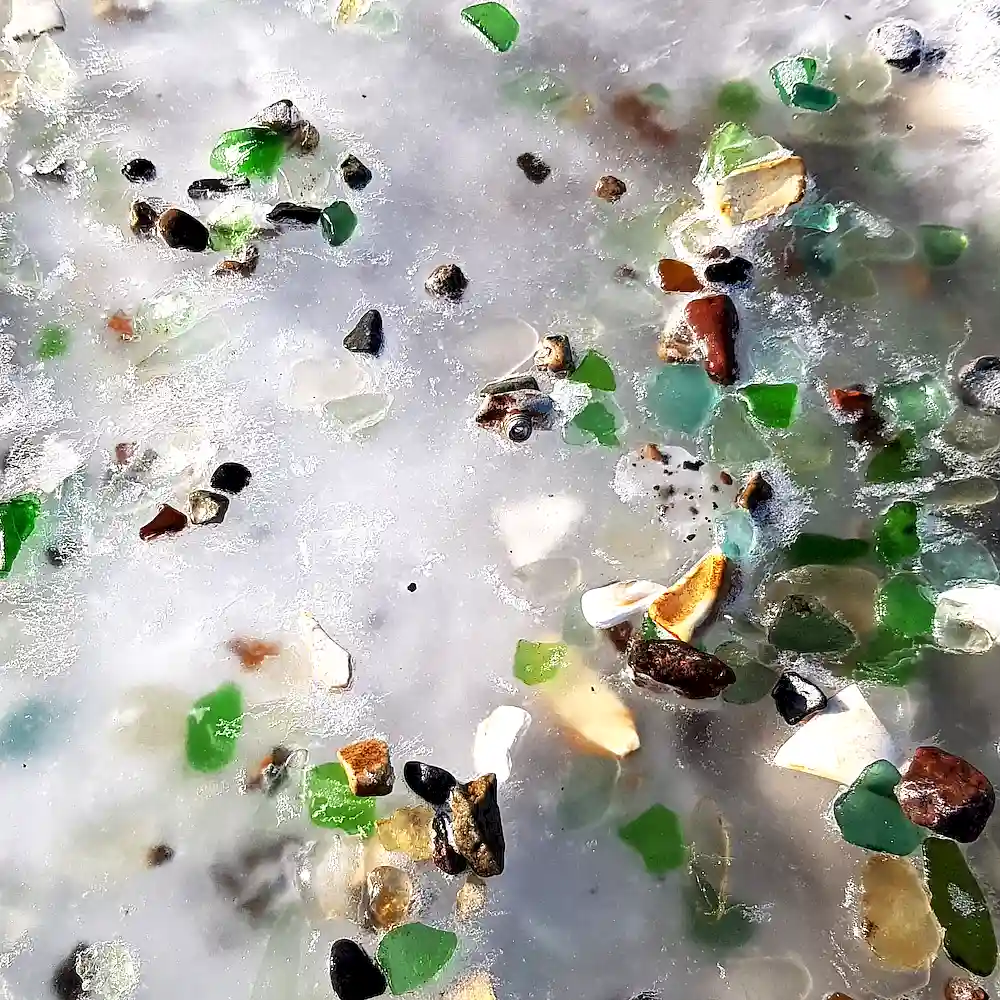
🎬 VIDEO: Frozen Sea Glass on Russian Glass Beach
Watch real-time Pacific ice locking historic fragments during low tide, accelerating the micro-fracturing process.
3. Chemical Leaching: How Seawater Frosts Glass
As waves roll the glass through wet volcanic sand, the ocean triggers a deep transformation within the material:
The Microscopic Particle Exchange
Inside the glass framework, a natural displacement process takes place. Water molecules from the sea slowly penetrate the surface layer, pushing out the loose sodium and calcium particles.
How Microscopic Cavities Are Formed
The displaced sodium creates a highly reactive, localized environment right at the glass surface, which gradually wears away parts of the main silica structure. Over decades of continuous exposure to the fierce Pacific surf, this loss of basic elements transforms the outer skin of the glass into an intricate, weathered layer filled with millions of microscopic cavities.
The Physics of the Velvet Frost
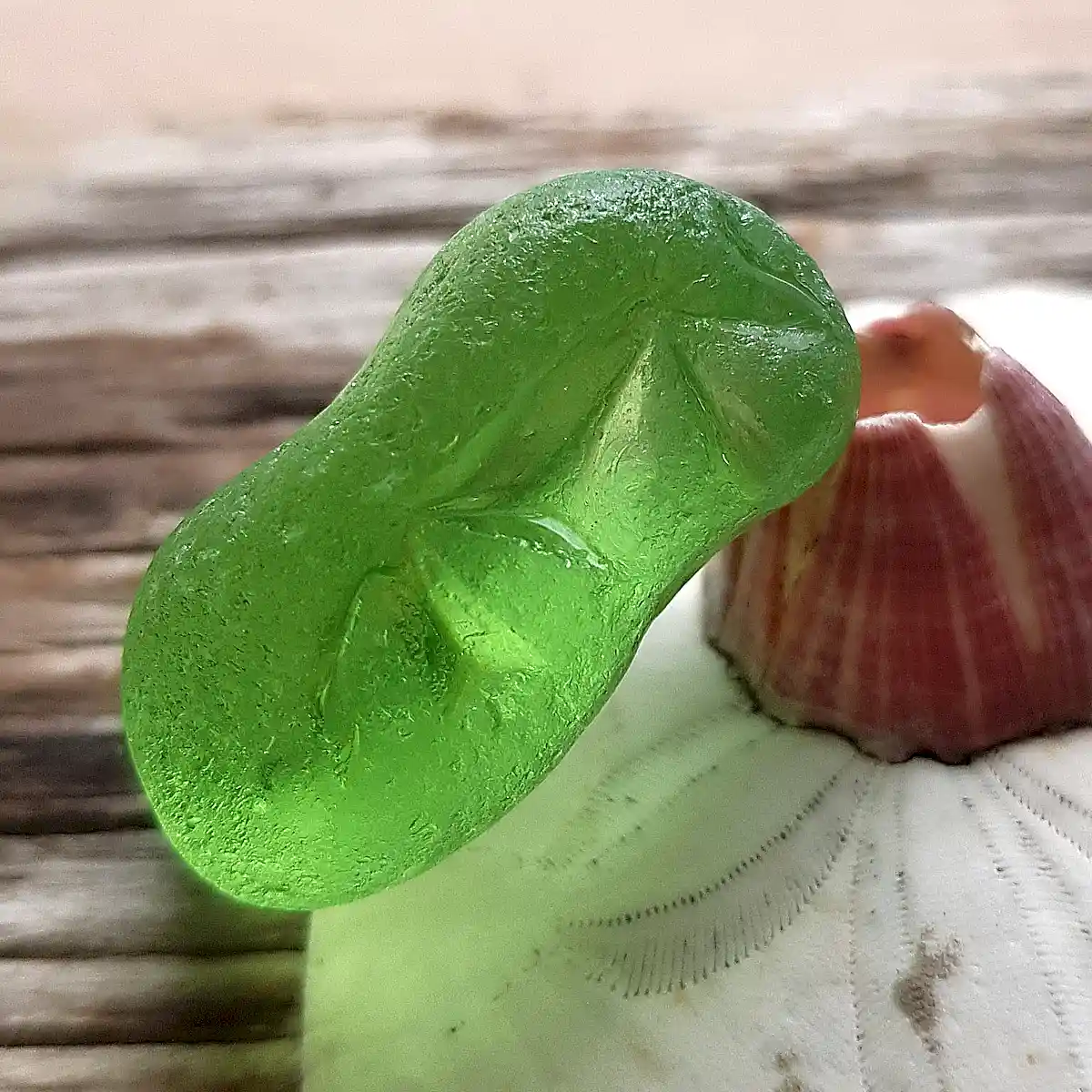
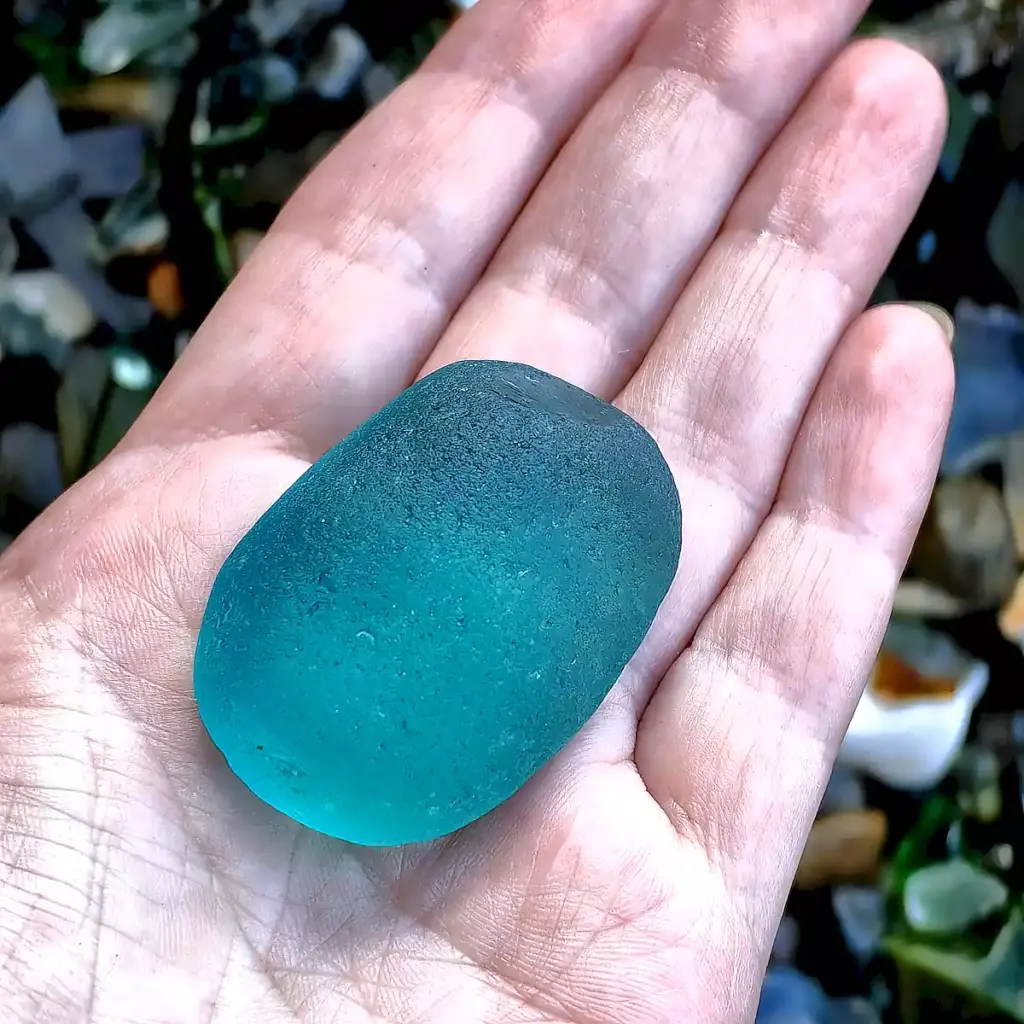
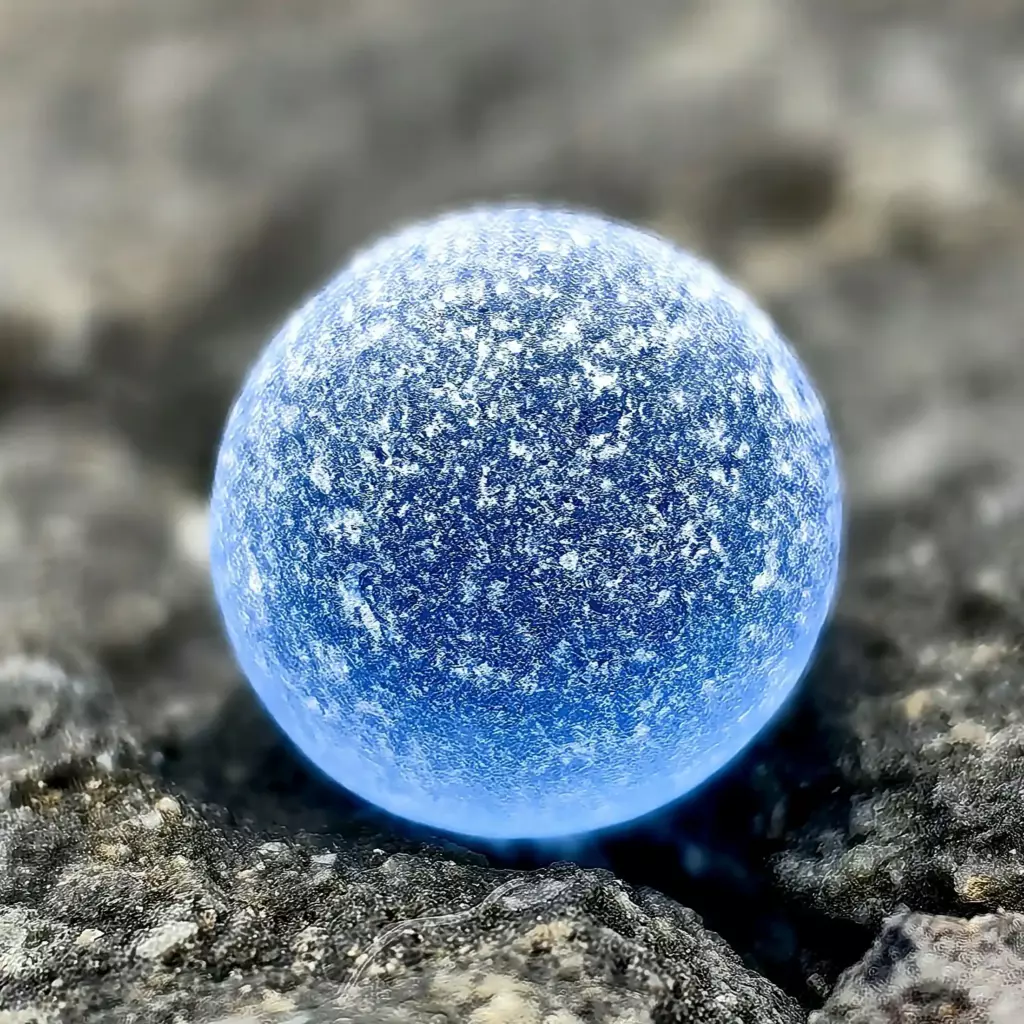
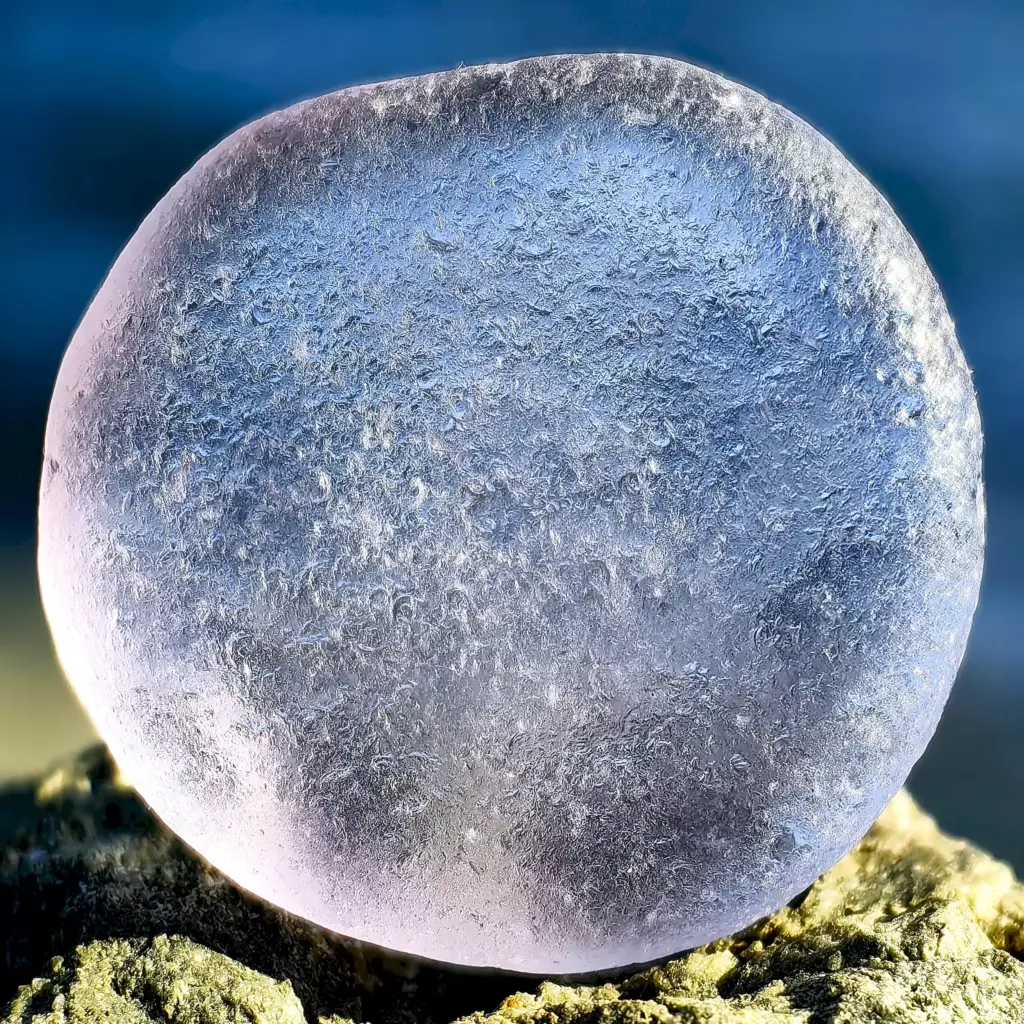
When a genuine piece of Russian sea glass dries on the shore of Ussuri Bay, its appearance changes completely. Light enters these microscopic surface voids and scatters diffusely in every direction instead of reflecting uniformly. This unique optical phenomenon creates that signature velvety, deep frost that feels like suede to the touch. Because commercial tumbling machines cannot replicate this slow, multi-decade chemical wear, this deep frost remains the ultimate certificate of authenticity for genuine Glass Beach discoveries.
4. C-Shaped Marks: The Unforgeable Fingerprint of Storms
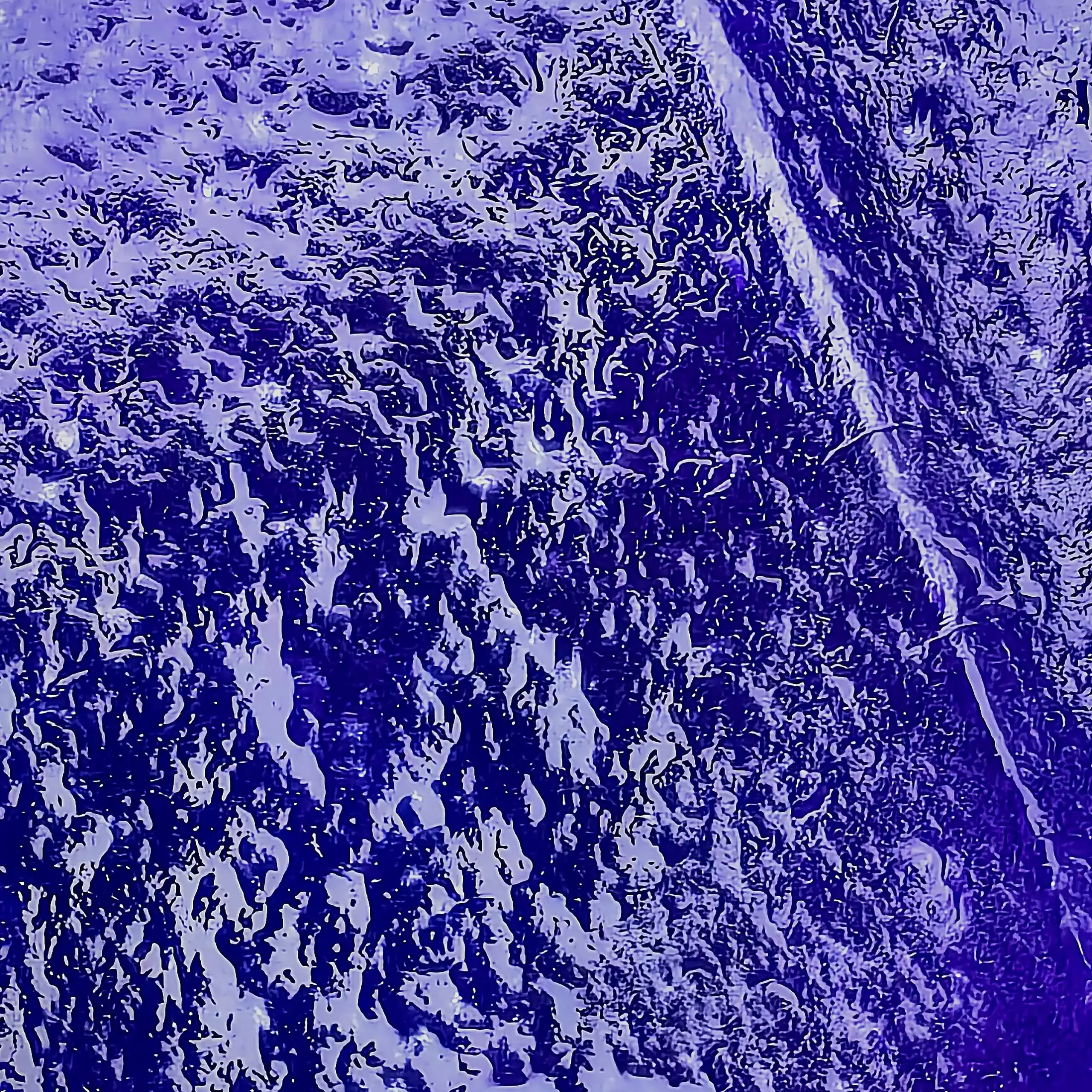
When physical wave impacts strike an aged, chemically altered surface, they leave behind the ultimate mark of authenticity: crescent-shaped impact fractures, known to collectors simply as C-marks.
In the violent breaker zone of the Sea of Japan, intense hydrodynamic wave forces slam the glass fragments against coastal rocks and coarse volcanic gravel. These high-energy impacts easily shatter the brittle, water-weakened outer crust, leaving behind dense, chaotic patterns of tiny crescentic micro-fractures.
Expert Authentication: Looking Under the Magnifier
Under a standard 10x magnifier, experienced collectors and materials experts analyze the structure of these surface marks. Genuine ocean-tumbled glass requires decades to develop layered, multi-dimensional fractures that fill with microscopic sand particles over time. Because commercial tumbling machines or chemical acid baths cannot replicate these chaotic, multi-layered impact scars on a perfectly uniform surface, C-marks remain the most reliable way to verify real Glass Beach discoveries.
Conclusion: Living History Formed by the Pacific
Genuine sea glass is a remarkable collaboration between coastal physics and marine chemistry. The brutal winter storm surf serves as the engine, the sharp volcanic sediment slurry acts as the grinding compound, and the cold saltwater works as the chemical solvent. Every weathered edge, velvety void, and asymmetrical C-mark on these fragments stands as authentic physical proof of a multi-decade journey through the ocean depths.
Ready to Own a Piece of the Deep?
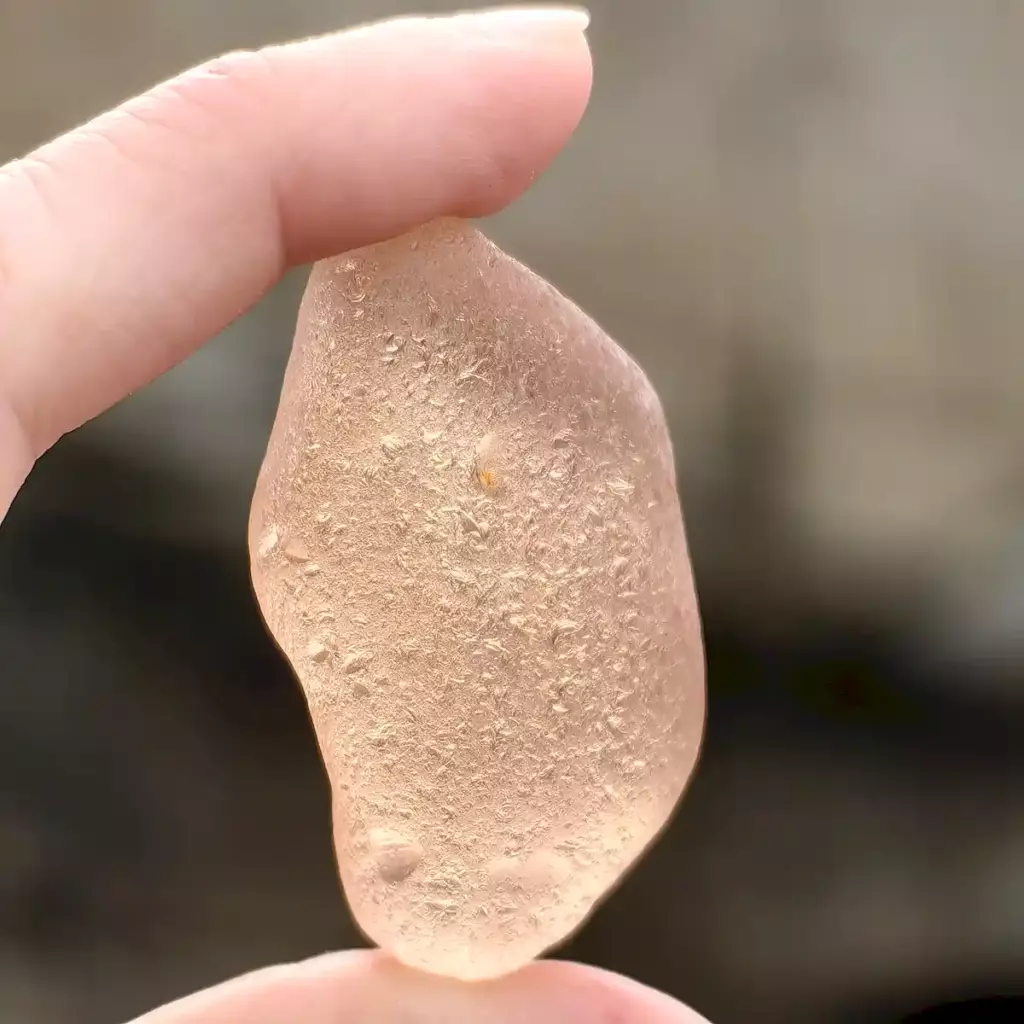
Step into our handpicked collection of authentic, time-softened Russian sea glass. Discover rare collector finds and unique jewelry-grade gems – each carefully sorted, verified, and shaped entirely by the unforgeable fingerprints of the ocean.
All our raw discoveries come with a lifetime guarantee of natural origin. No mechanical tumblers, no harsh acids, no artificial shaping.

About the Author
Tatiana Japanseaglass is the founder of Japan Sea Glass with over 15 years of expertise in coastal geology and glass research. Based near the storm-swept shores of Vladivostok, she uses materials science to verify and bring authentic ocean gemstones to collectors worldwide.
References & Further Reading
- Clark, D. E., & Zoitos, B. K. (1992). Corrosion of Glass, Ceramics and Ceramic Superconductors. Noyes Publications.
- Laursen, T., & Lanford, W. A. (1978). Hydration of soda-lime glass. Journal of Non-Crystalline Solids.
- International Sea Glass Association (ISGA / formerly NASGA). The Science of Sea Glass Weathering and Identification Guidelines.
- Scholze, H. (1991). Glass: Nature, Structure, and Properties. Springer-Verlag.
🔎 Coming Up in Part 2: Ever wondered why machine-tumbled glass and acid-etched imitations look flat and lifeless under magnification? In our upcoming Part 2: Forensic Authentication — Why Craft Counterfeits Can’t Fool Science, we will dive deep into the unmistakable microscopic flaws of artificial glass. Stay tuned — it’s coming soon!
