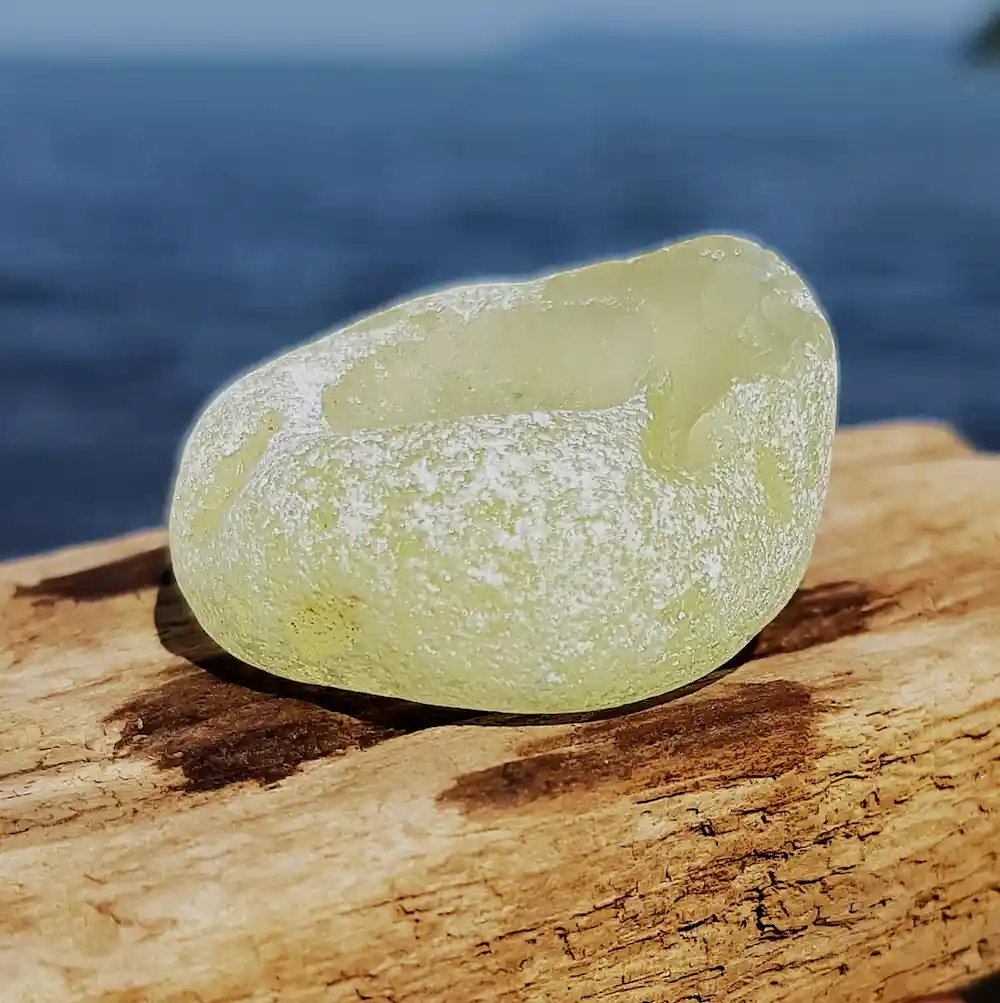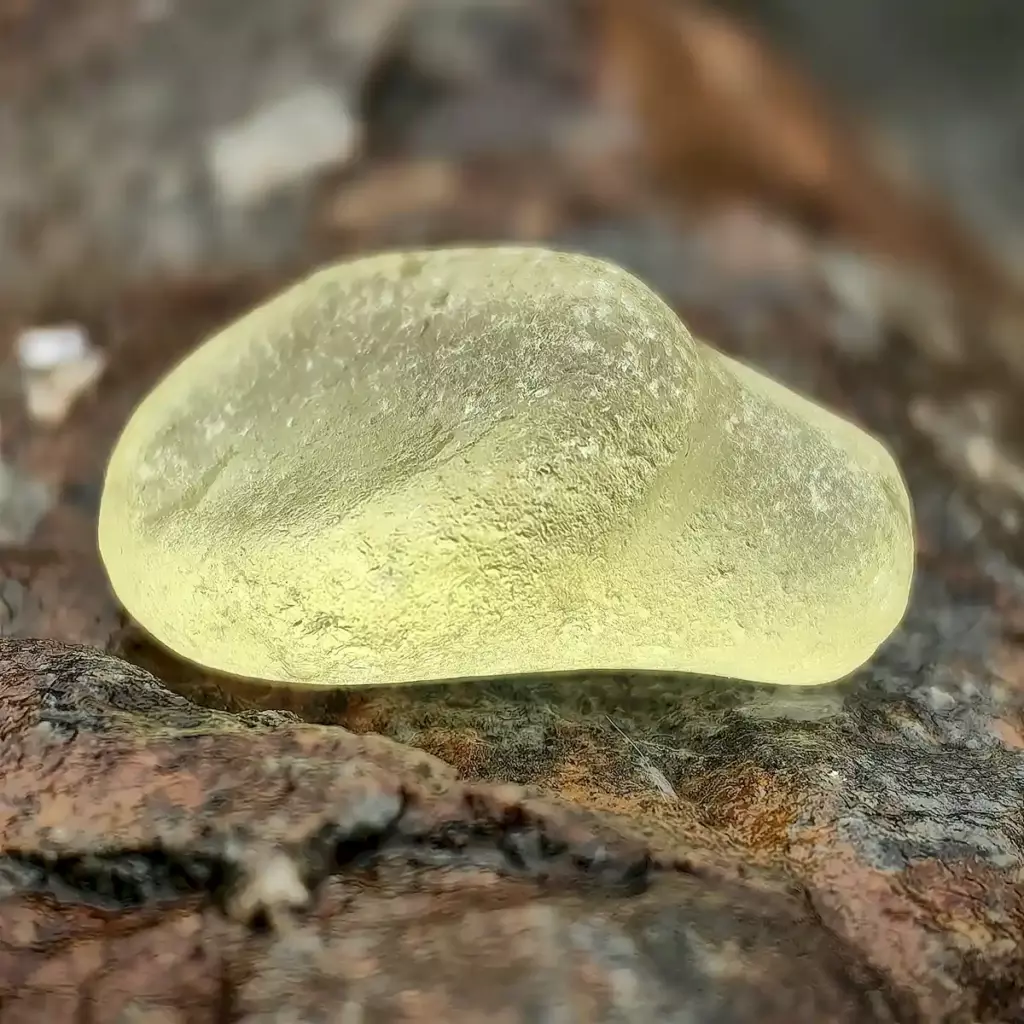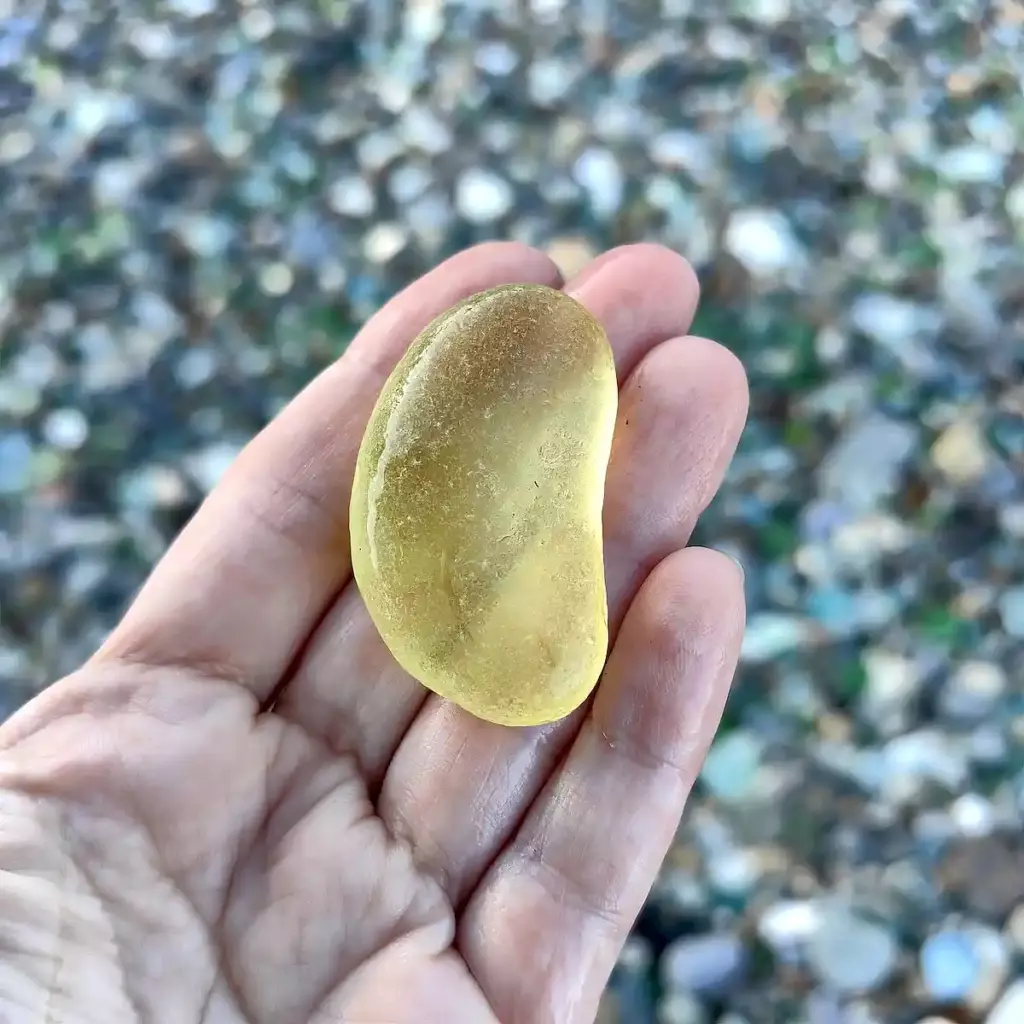
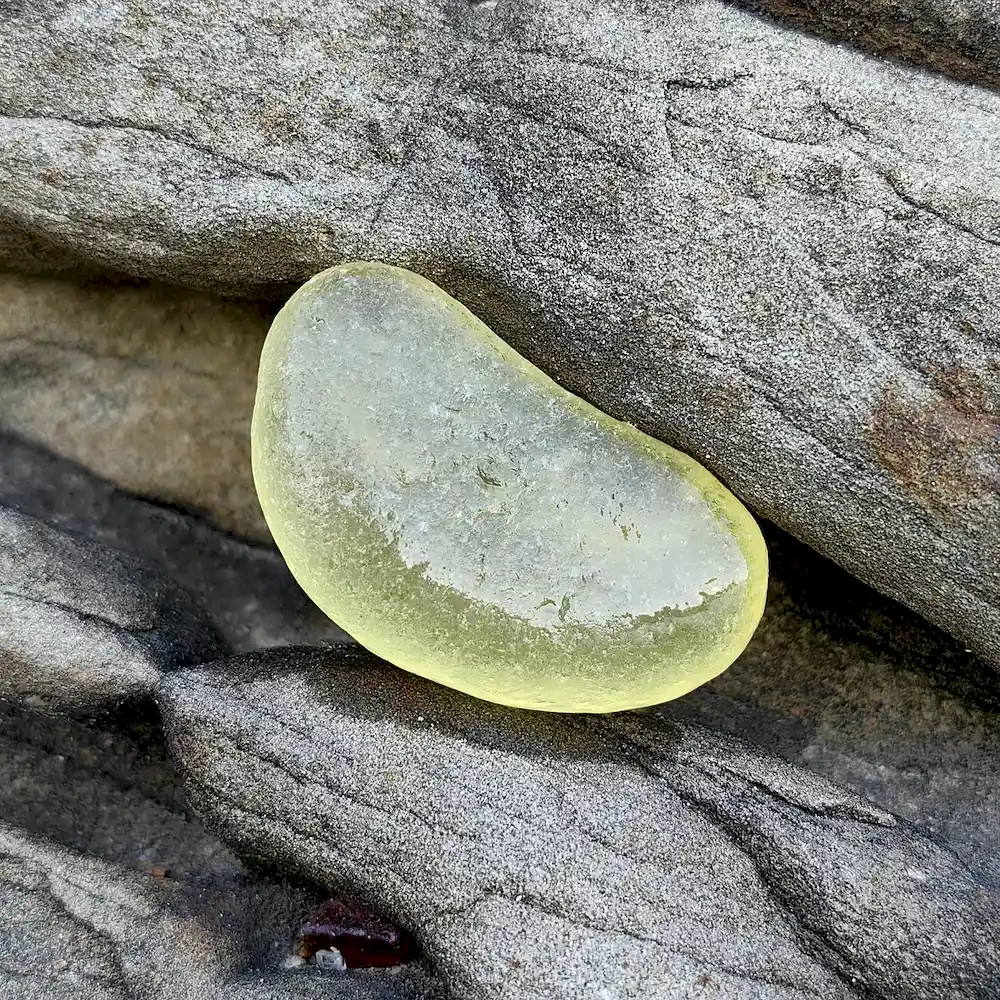
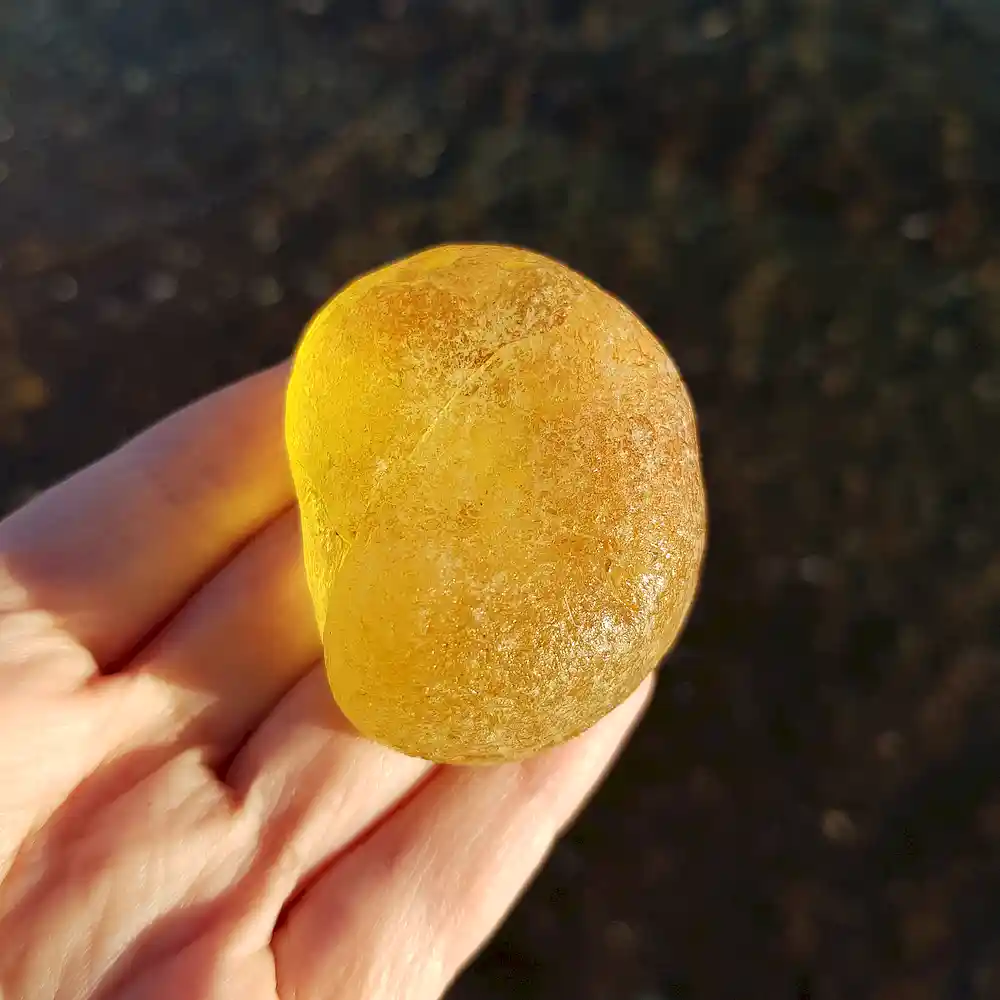
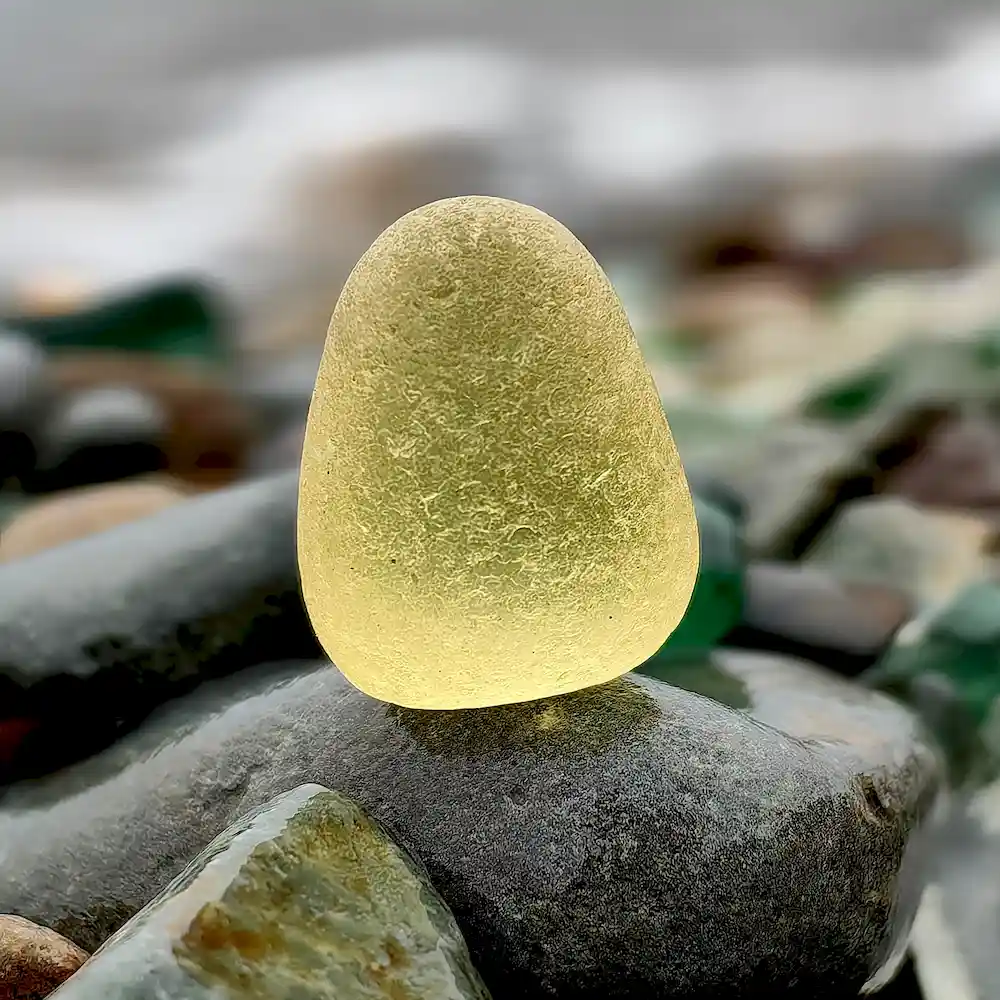
Walking along the rugged shores of the Sea of Japan, your eyes quickly get used to the usual blues, greens, and whites tumbling in the waves. But every once in a while, the tide rolls back to reveal something completely mesmerizing—a thick, glowing chunk of pure, frosted sunshine. Collectors call these rare, vibrant finds yellow sea glass, and in this corner of the world, they carry a spectacular history.
Born in the Soviet Era
These aren’t just random shards from everyday bottles. Most of this stunning yellow sea glass pieces has a proud, decades-old pedigree. It traces its roots back to the 1960s and 1980s, born in the roaring furnaces of the legendary Gusev Crystal Factory. Back then, these heavy, beautifully crafted glass pieces were staples in households across the Soviet Union.
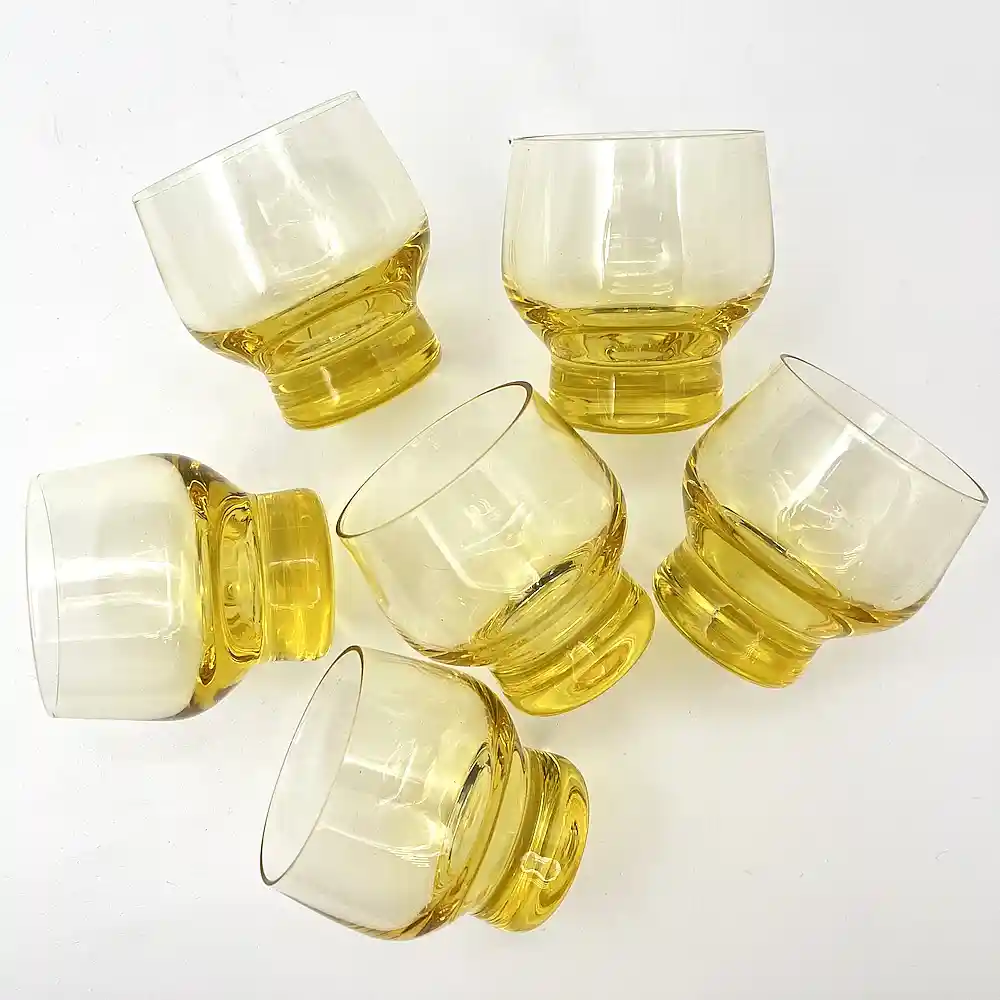
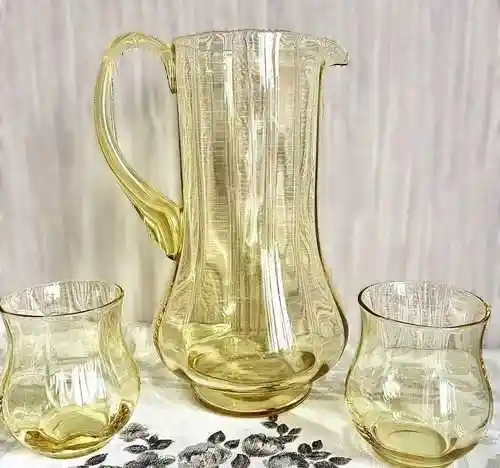
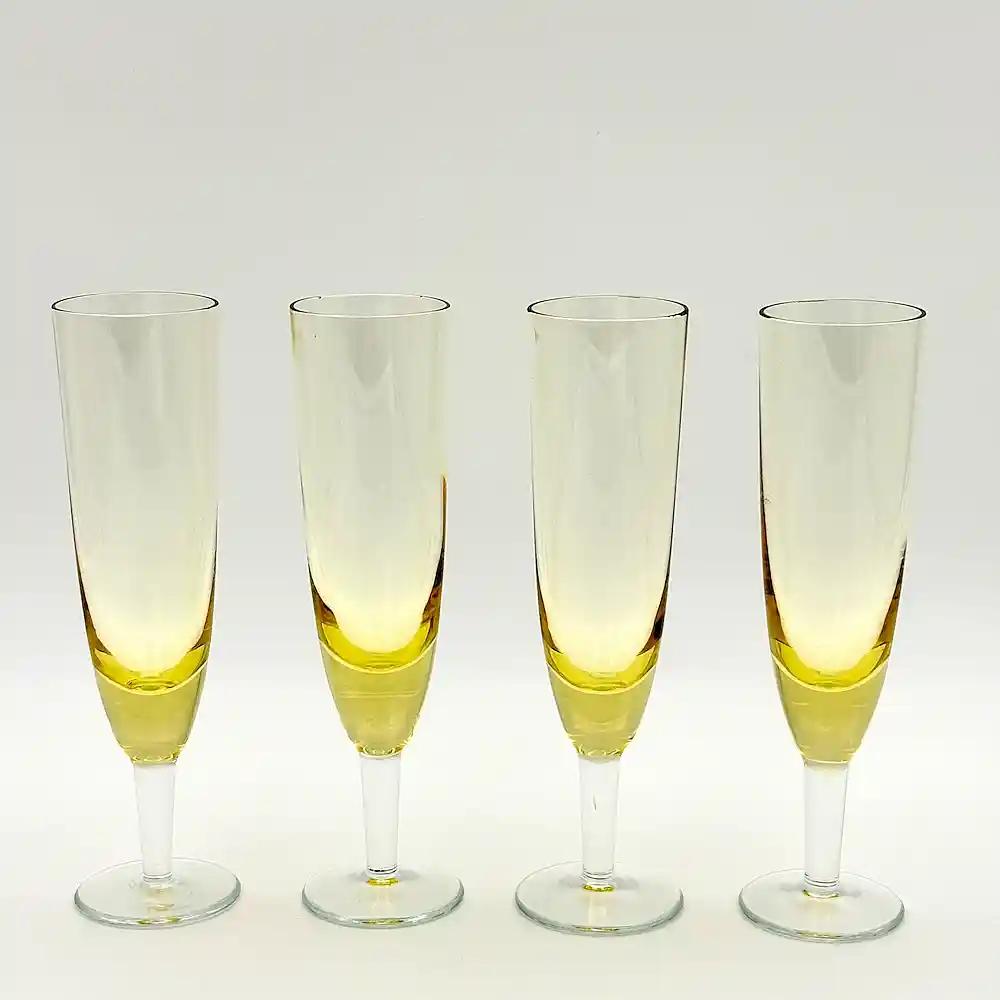
But like any glassware, they eventually broe and ended up in dumps. From there, they found their way into the wild waters of the Sea of Japan, where the ocean spent the next half-century transforming vintage tableware into beachcombing gold.
What Makes It So Special?
If you’re lucky enough to spot a piece of Russian yellow sea glass on the beach, you’ll feel the difference instantly. It doesn’t look—or feel—like anything else out there.
• Impressive Size and Chunky Thickness: Forget thin, delicate pieces. Because this sea glass started life as heavy Soviet wine glasses, shot glasses, and carafes with massive, thick bottoms, the finds you pick up today are wonderfully thick and substantial. They have a hefty, satisfying weight that feels incredible to hold in your palm.
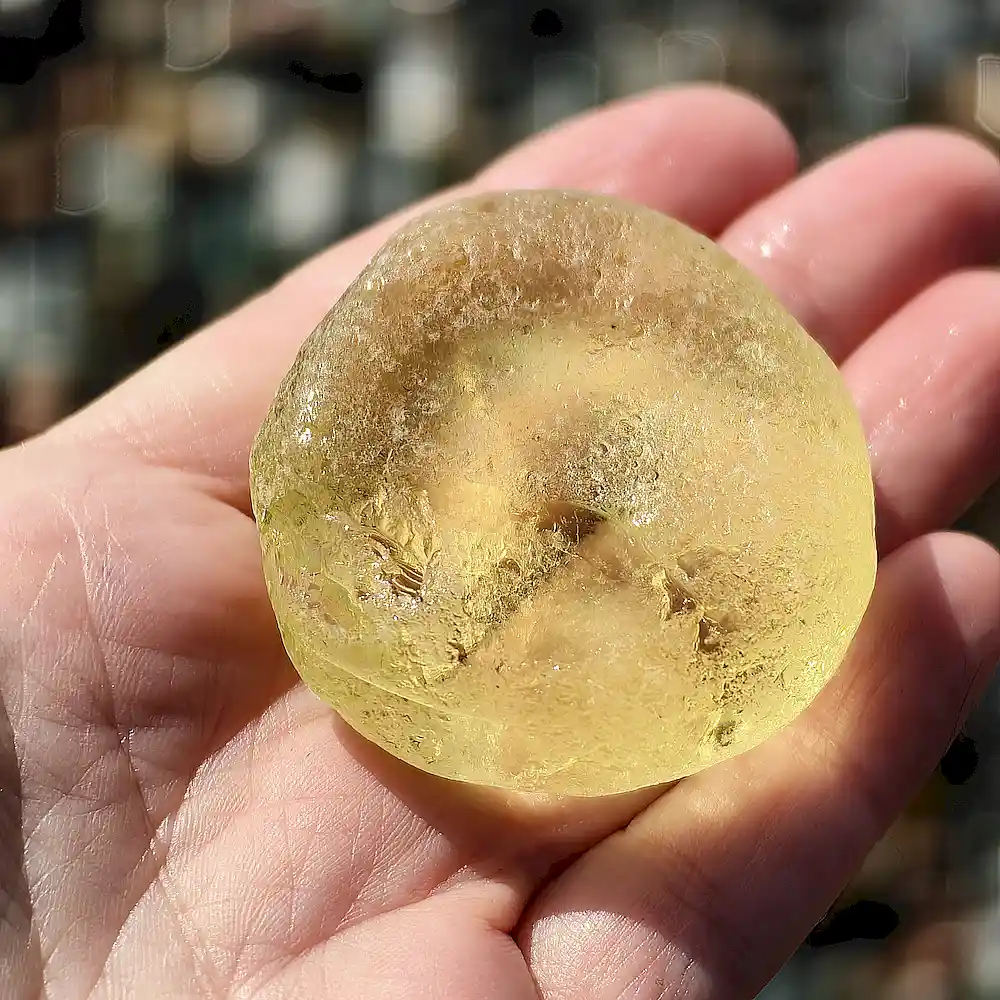
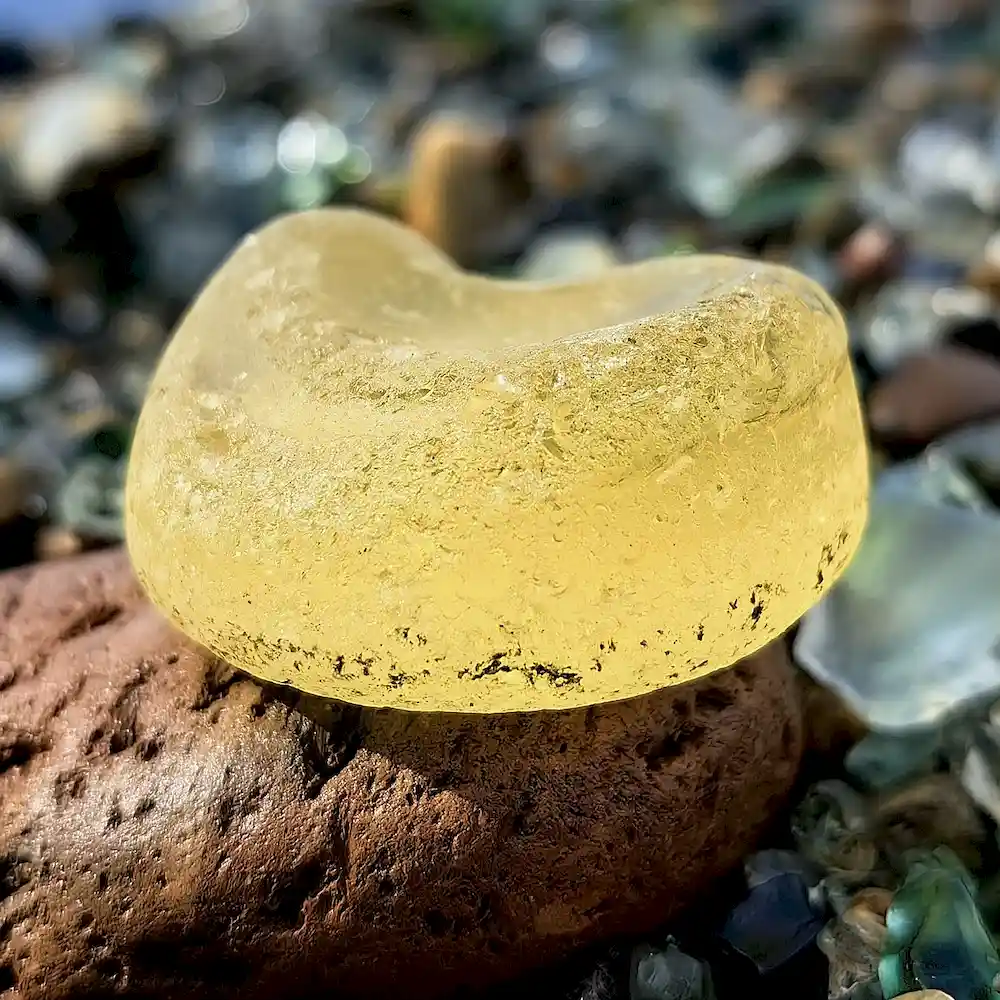
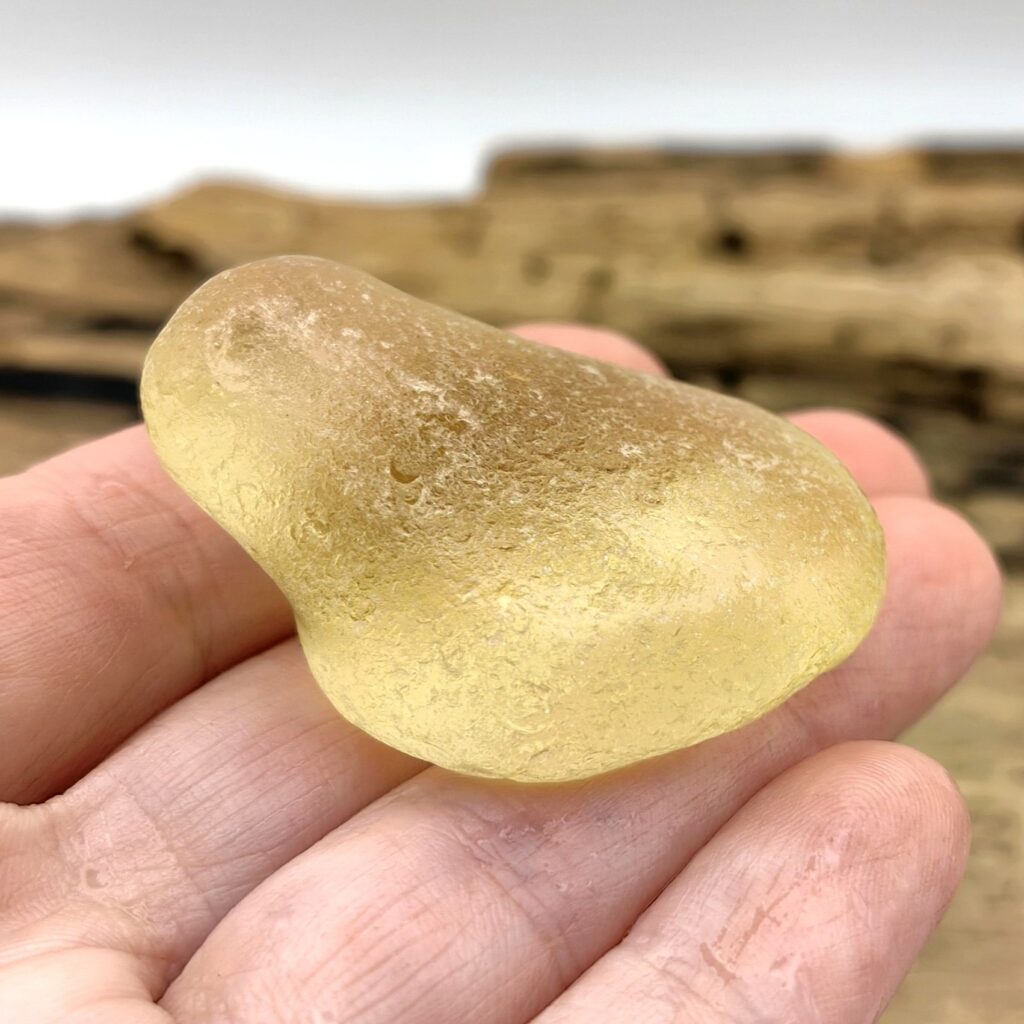
• The Legendary Deep Frost: This is what turns a simple piece of glass into a true masterpiece. The fierce, relentless waves of the Sea of Japan, combined with coarse beach sand and rocks, act like a giant, natural rock tumbler. They grind away sharp edges, leaving behind an incredibly deep, matte finish. It looks just like a perfectly sculpted piece of sea-candy.
“The ocean spent half a century turning broken vintage tableware into smooth, frosted sea-candy.”
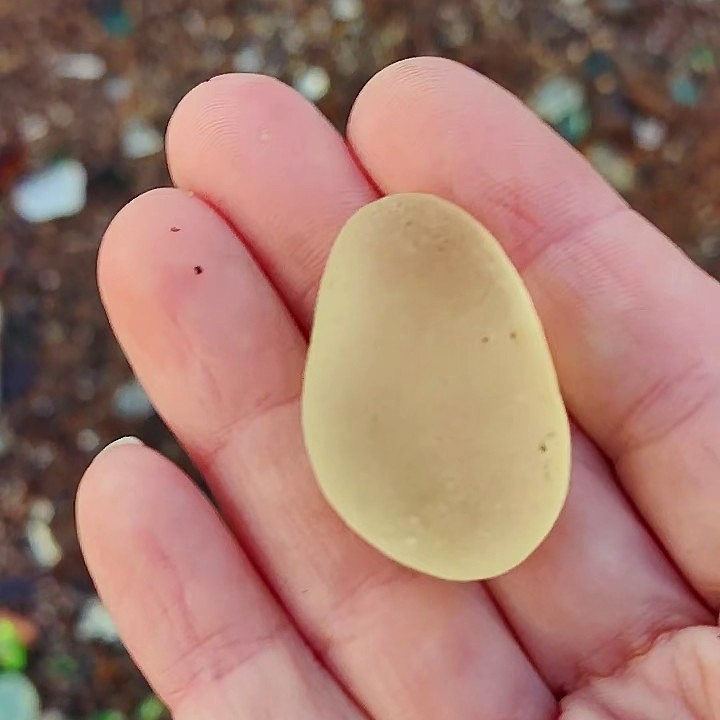
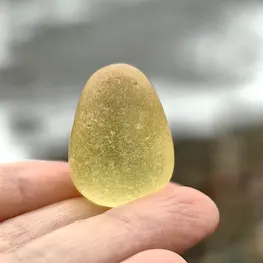
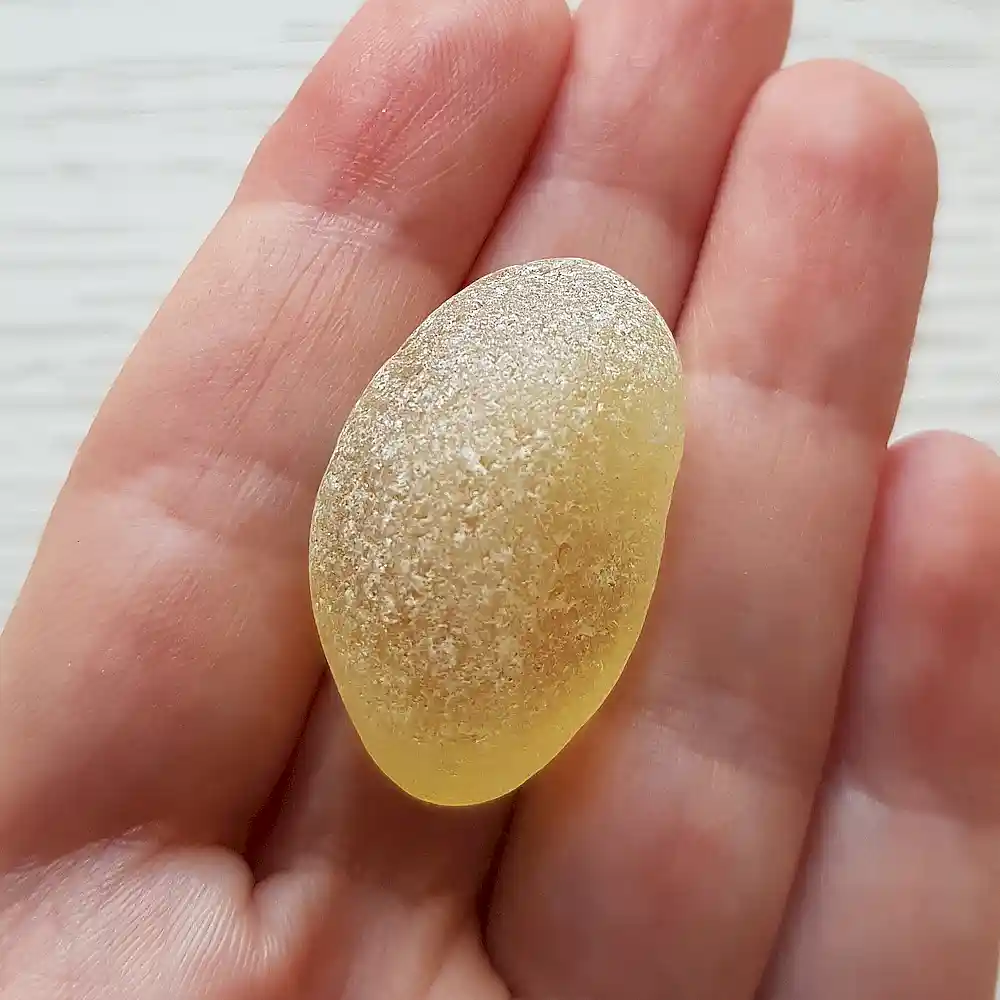
• A Palette of Frozen Sunlight: The way these pieces catch the light is pure magic. Because of the glass’s extreme thickness, the color deepens and shifts depending on how you hold it, glowing from within even on a gray, overcast day.
The Alchemy of Color: “Golden Topaz” and “Amber”
The secret behind that mesmerizing glow lies in the vintage recipes used at the factory. This wasn’t cheap, mass-produced glass; it was a carefully crafted soda-lime-silica blend. To get those rich, warm tones—which the artisans at Gusev officially called “Golden Topaz” or “Amber”—master glassmakers added precise doses of metal oxides to the melting mix:
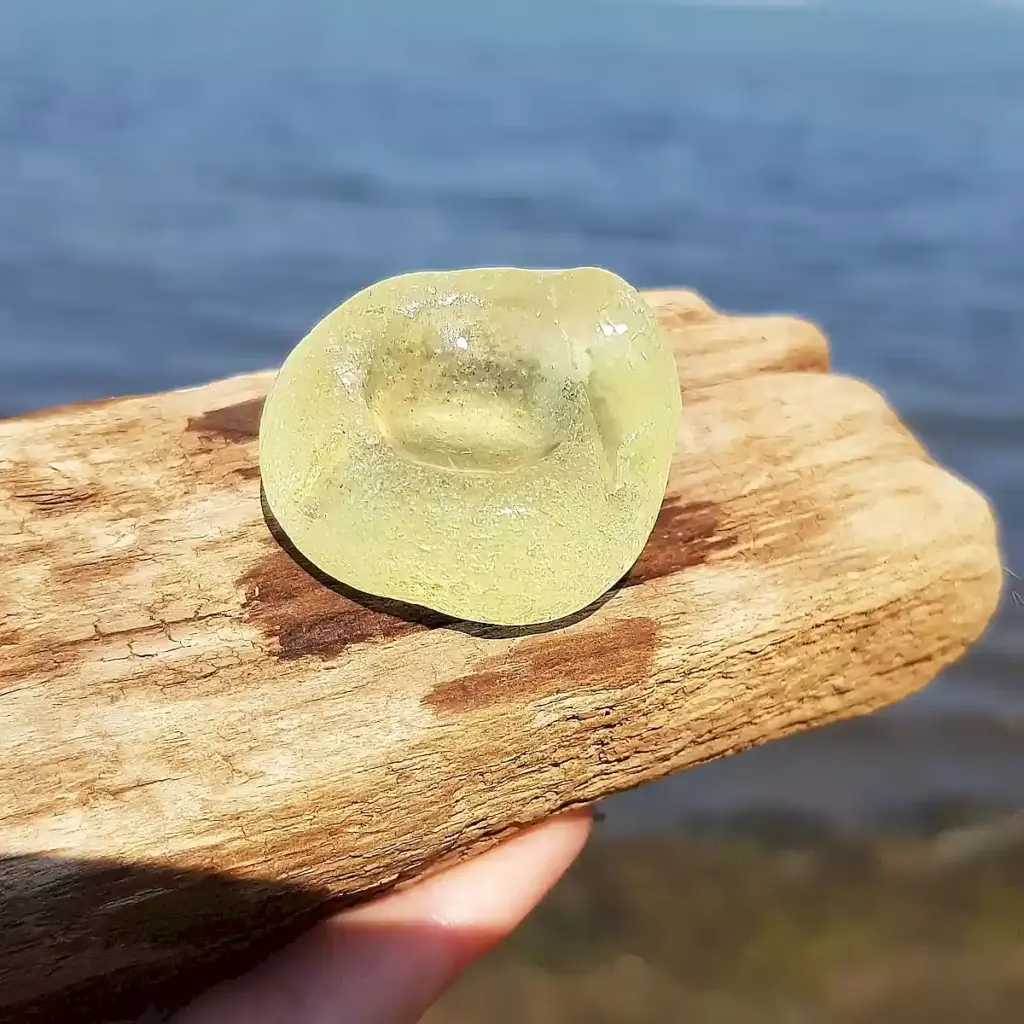
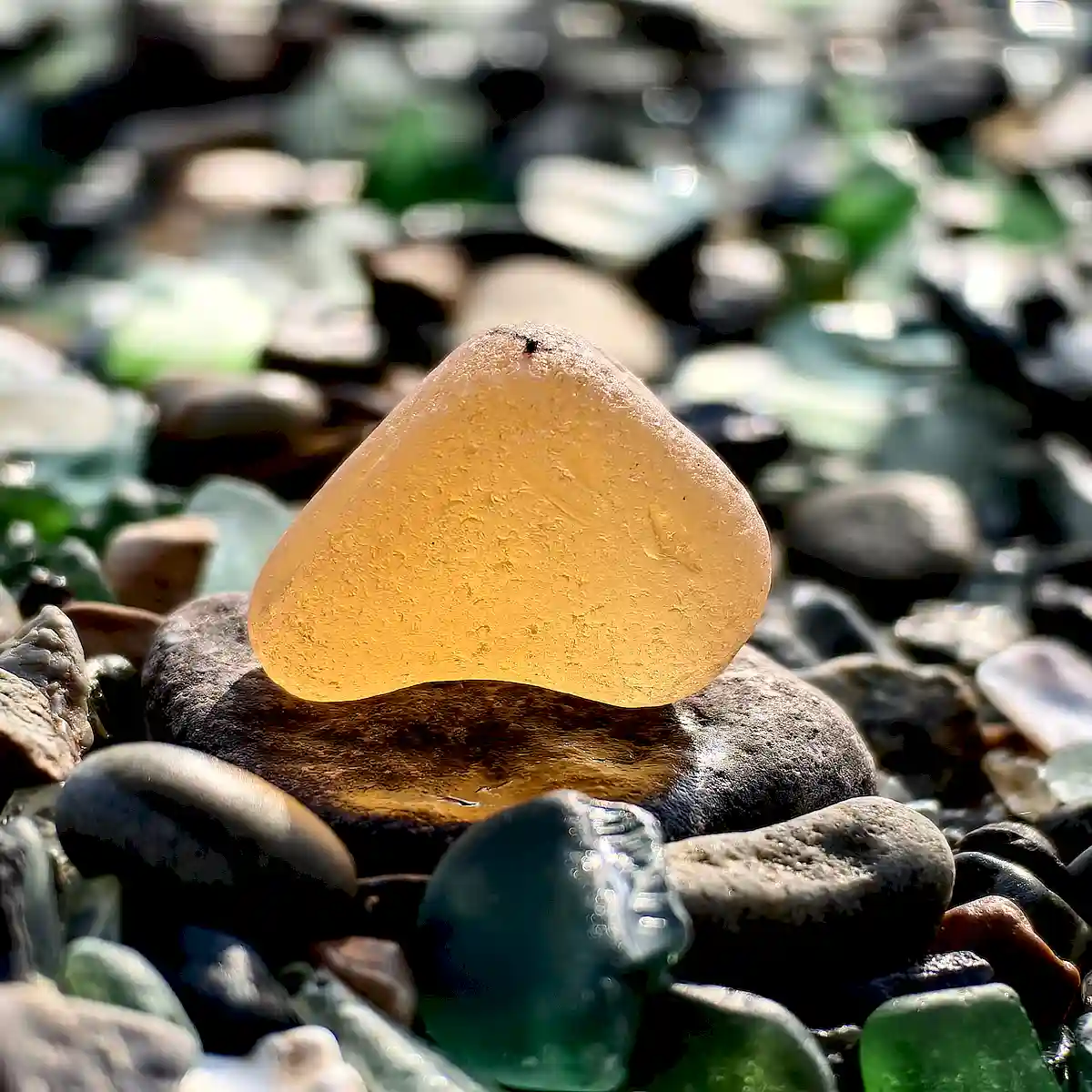
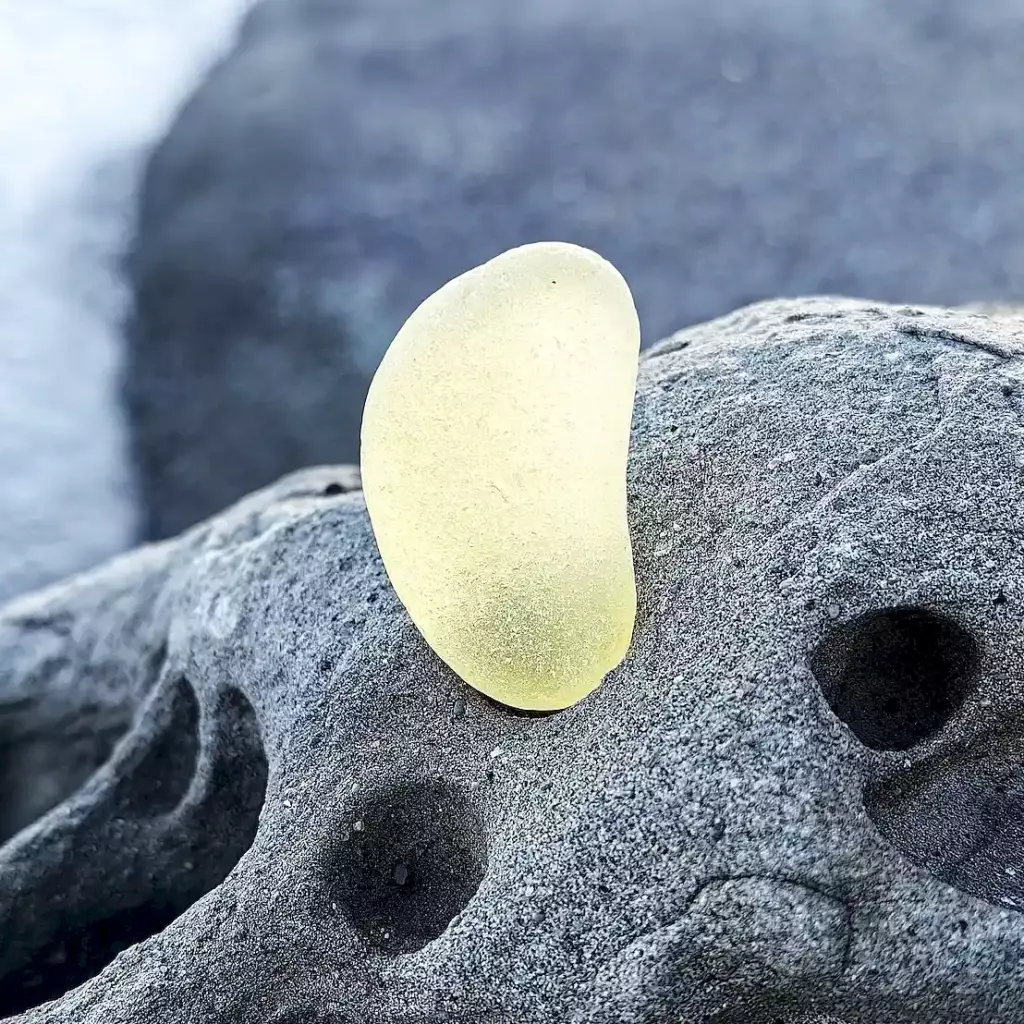
✦ Iron and Manganese Compounds: This classic combo created a gorgeous spectrum of warmth. Depending on the exact concentration and the intense environment inside the furnace, it produced everything from a delicate, pale straw-yellow to a rich, deep cognac hue.
✦ The 1970s Secret (Cerium and Titanium): In the 1970s, the factory started using rare-earth elements. By pairing cerium oxide with titanium, they unlocked a brilliant, sparkling lemon-yellow. This specific mix gave the glass a unique superpower: it never fades over time, and it beautifully refracts light right through the thickest parts of the chunk.
To give you a glimpse of this incredible transformation, let’s look at where the journey begins and where the sea takes it. Below are the original, elegant vintage pieces from the Gusev factory, followed by the wild, frosted treasures washed ashore today.