
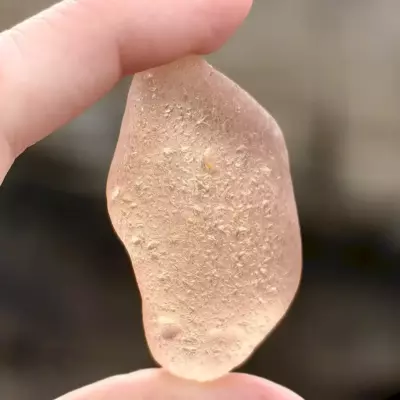
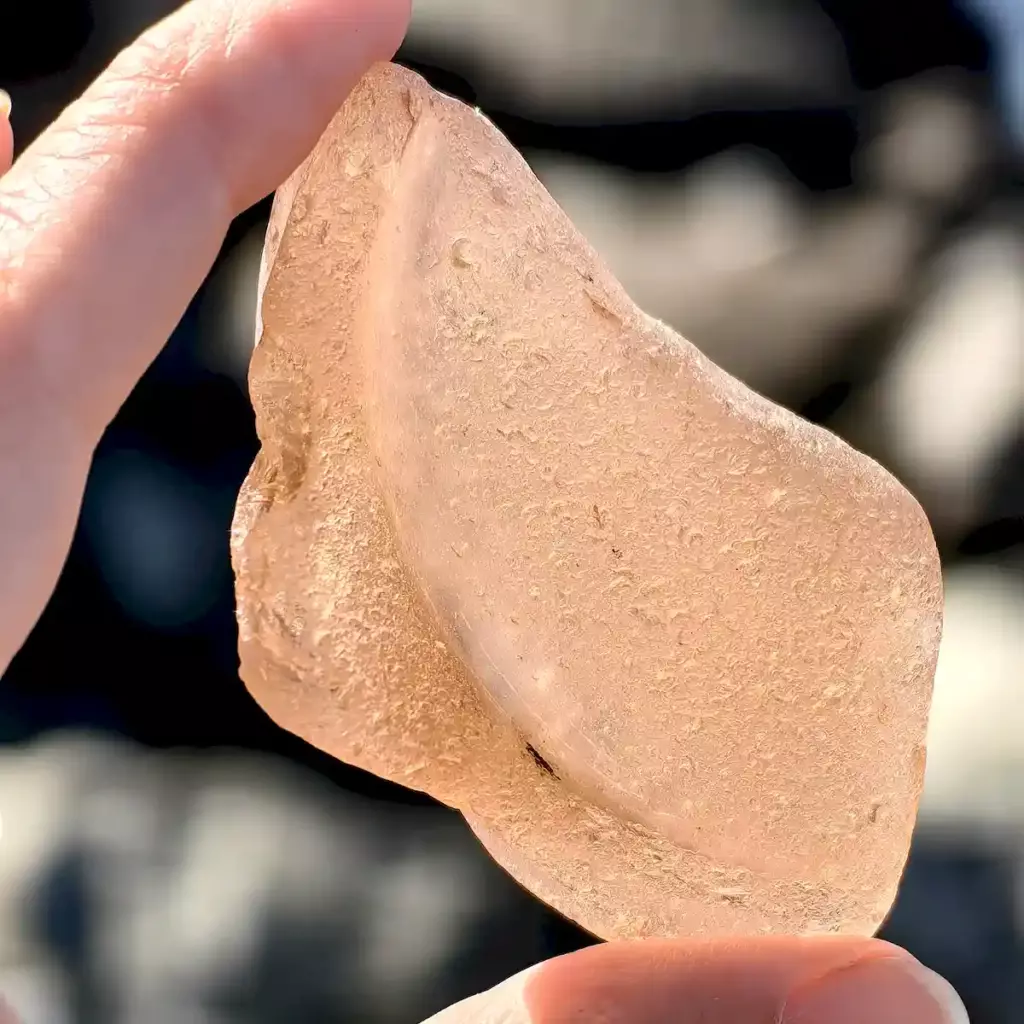
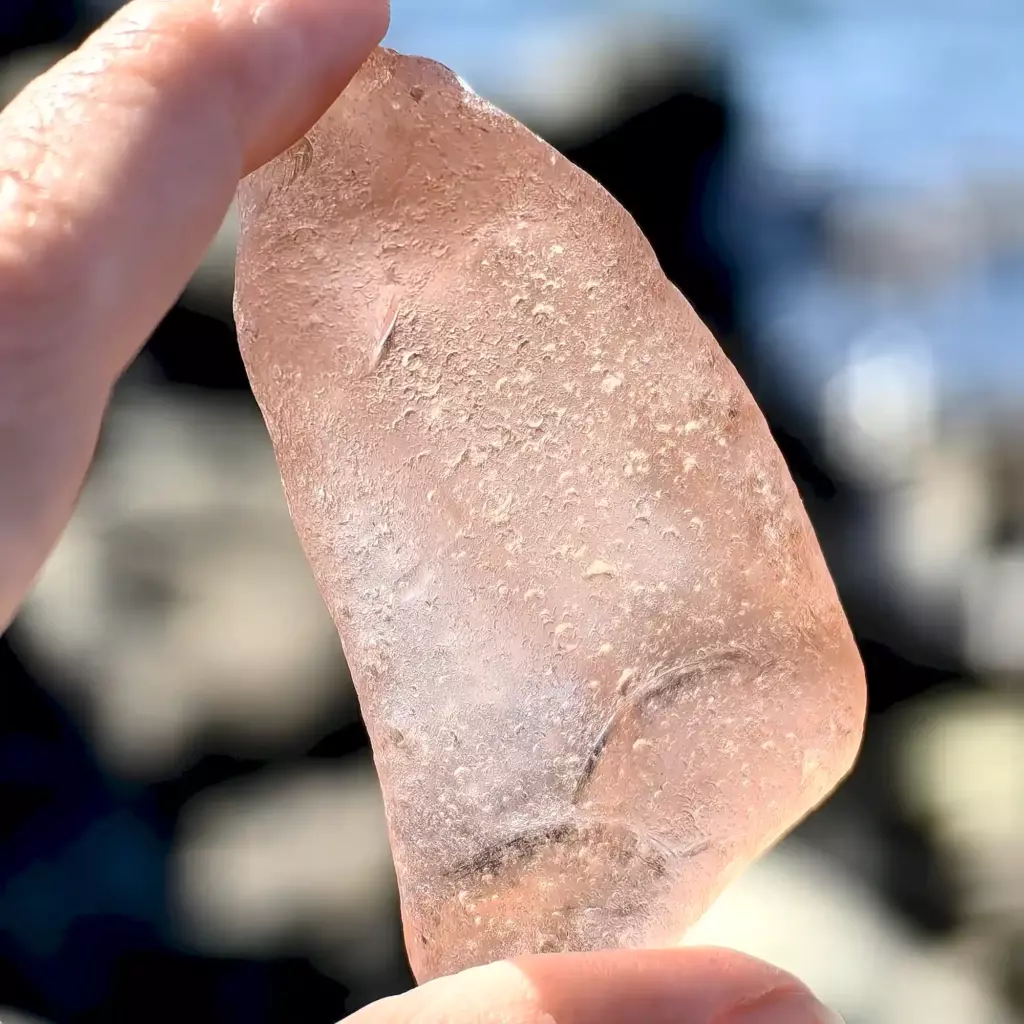
Walking along the volcanic sands of Ussuri Bay, your eyes easily track the bold ultramarines and vibrant greens tumbling in the waves. But every once in a while, after a severe Pacific storm, the rolling waves wash ashore a rare, glowing piece of authentic Russian pink sea glass – a thick contour of frosted peach, warm salmon, or delicate dusk pink.
Behind this delicate ‘sunset’ appearance lies a volatile twentieth-century chemical recipe, making it a prized signature piece for any serious collection of authentic, ocean-tumbled sea glass.
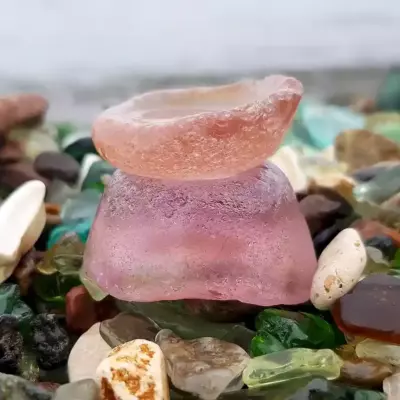
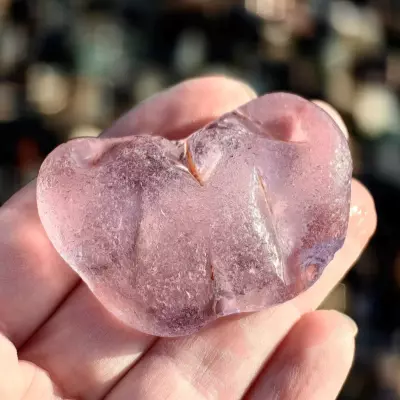
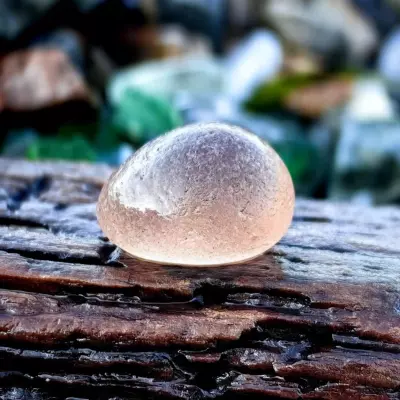
Chapter 1. The Alchemy of Selenium: A Volatile Signature
To understand how a piece of authentic pink sea glass obtained its warm, golden-peach undertone, we must step onto the factory floor of a mid-century glassworks. For international beachcombers, this delicate palette immediately brings to mind the famous American “Depression Glass” of the 1920s and 1930s.
Is Russian Pink Sea Glass the Same as American Depression Glass?
Interestingly, the vintage Soviet Rosaline glassware found along our Pacific coastlines shares the exact same selenium-based chemical DNA as its American counterpart. This means the historical pink sea glass of Ussuri Bay is chemically identical to the prized collectibles of the West.
However, there is a major structural difference that sets genuine Russian sea glass apart:
- American Depression Glass: Typically thin, fragile, and delicate, often ground into complete sand by harsh waves.
- Soviet Rosaline Glass: Engineered between the 1950s and 1970s as heavy, thick-walled art pieces. Their sheer mass allowed them to survive decades of violent coastal tumbling.
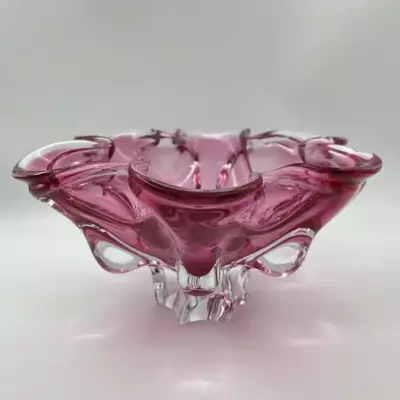
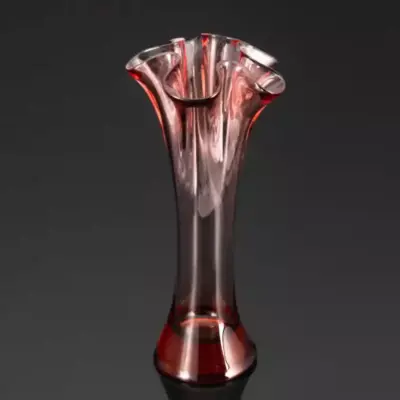
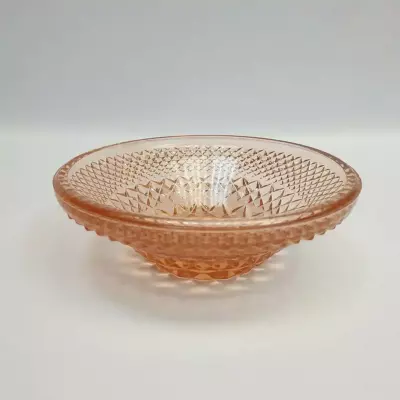
The Two Historic Styles of Soviet Selenium Glass
The secret behind that beautiful coloration relies entirely on elemental selenium (Se) – a temperamental ingredient that manifested in two completely distinct, yet equally luxurious styles of art glass:
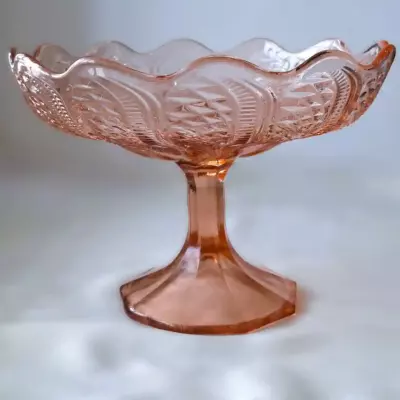
- Warm Selenium: A dense, rich, caramel-salmon or golden-peach tone. This is how selenium revealed itself in heavy, pressed tableware (candy dishes, fruit bowls, and stemware with faceted bases) where the colorant dosage was higher, and a secondary heat treatment inside the kiln was applied to bring out the color.
- Cold Rosaline: A powdery, cool-toned, watercolor pink without a single hint of yellow. This was a true triumph for Soviet glass artisans. To tame the natural fiery amber undertone of selenium, they introduced micro-doses of deep blue cobalt oxide into the batch. The cobalt optically canceled out the yellow spectrum, leaving behind a pristine, cool pastel pink.
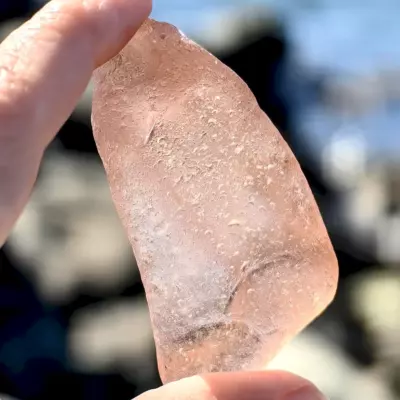
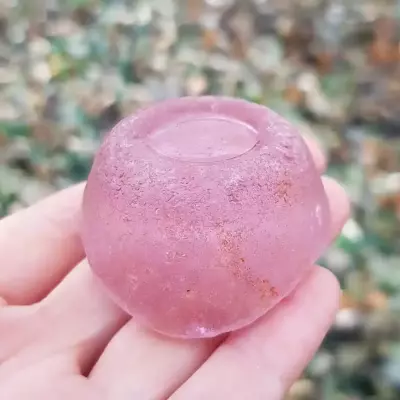
🎬 Watch the magic in motion: Explore the live spectrum, heavy velvet frost, and raw coastal beauty of these pink treasures directly in our YouTube Playlist: Hunting for Pink Sea Glass.
Chapter 2. The 365nm Secret: Unleashing the Neon Glow
While a selenium shard looks perfectly elegant and serene in normal daylight, its true magical properties manifest under a filtered 365nm ultraviolet light.
Why Does Pink Sea Glass Glow Under UV Light?
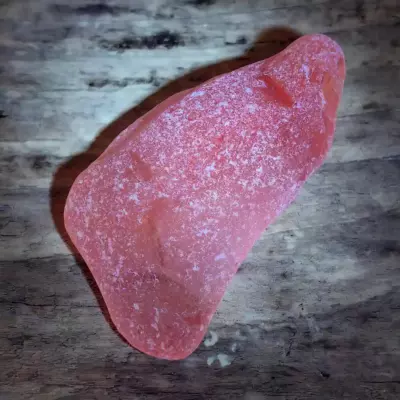
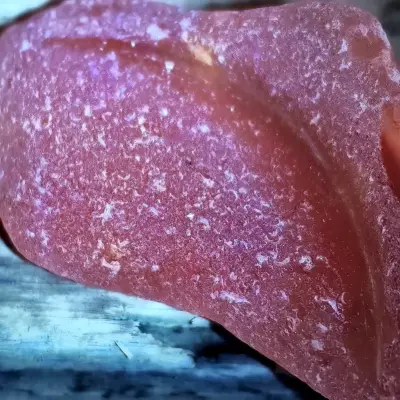
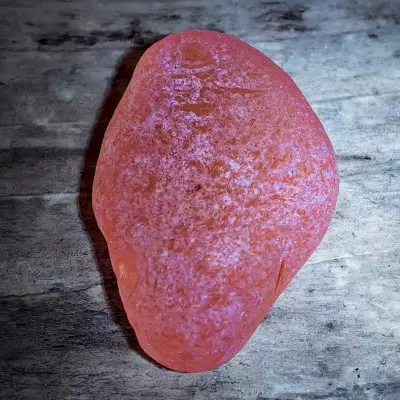
The unique chemical composition of a genuine selenium-doped piece carries an intense fluorescence. In complete darkness, passing a 365nm UV beam over a weathered peach or powdery specimen reveals a deep, luminous reaction from within. Under the 365nm beam, the glass radiates a distinct raspberry-pink or a warm, saturated peach-orange fluorescence.
365nm vs. 395nm UV Light: Which is Better for Testing Sea Glass?
If you test the same shard under a standard 395nm UV light, the reaction will still occur. However, the excess visible purple light emitted by a 395nm diode will partially flood the piece, causing the hot pink glow to look significantly more muted and muddy. For authentic Russian pink sea glass identification, a filtered 365nm torch is always recommended to see the pure, uninterrupted color.
💡 Did You Know? From Kremlin Stars to Holiday Tableware
Before the 1940s, creating vibrant pink or rich red glassware required expensive colloidal gold formulas. The shift to selenium in Soviet tableware was actually fueled by a monumental architectural project: the Kremlin stars. When engineering the massive, high-durability glass for Moscow’s iconic landmarks, Soviet glass scientists under the leadership of master technologist Nikolai Shpigel perfected a special “selenium ruby” recipe. Once this complex formula was mastered for military and architectural scales, factories adapted the technique for luxury home decor. By scaling down the selenium dosage, they unlocked the delicate, elegant Rosaline glassware that today washes up on our shores.
Chapter 3. Wave Mechanics: How the Sea Frosts a Pink Legacy
Once these delicate domestic treasures and heavy interior vases found their way into the high-energy surf zone of the Sea of Japan, a long, harsh transformation began. The unique environment of Glass Beach dictates exactly how this specific material ages.
The Chemistry of Ocean Leaching
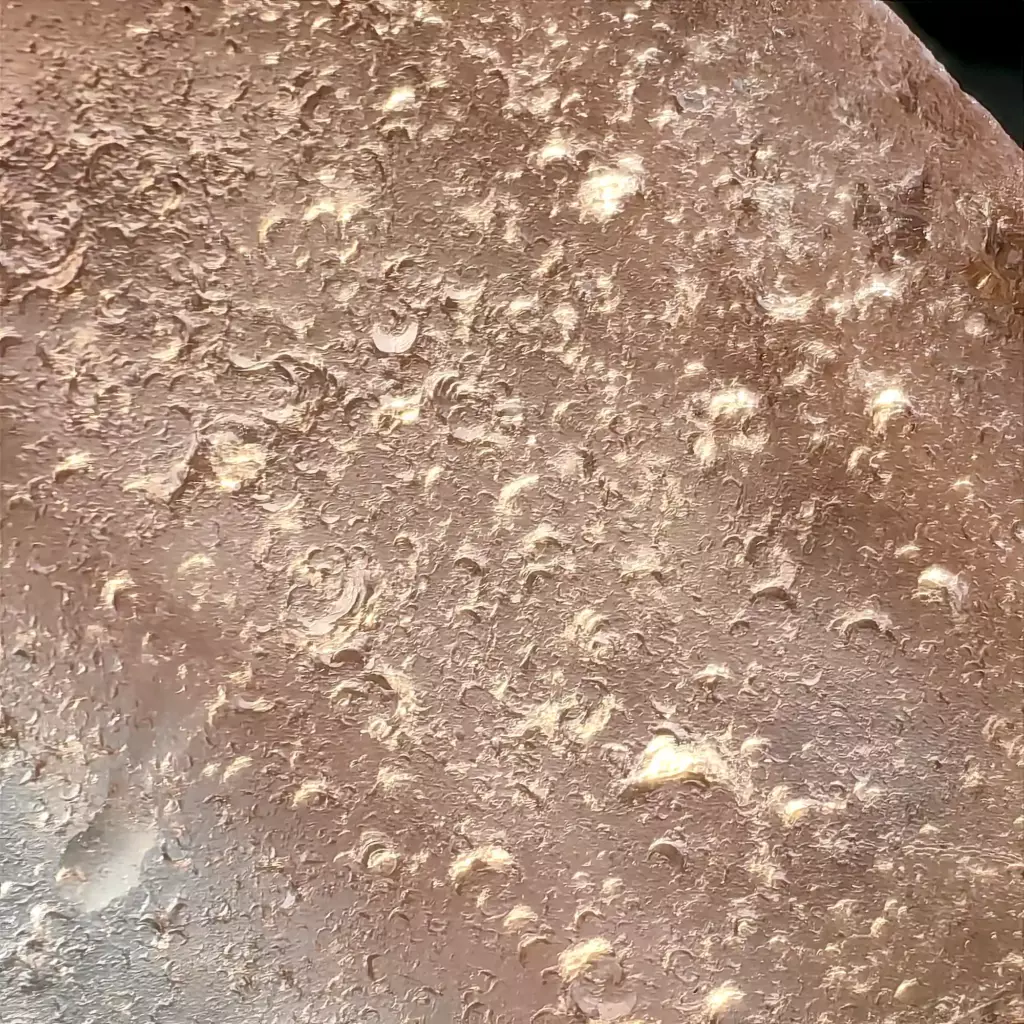
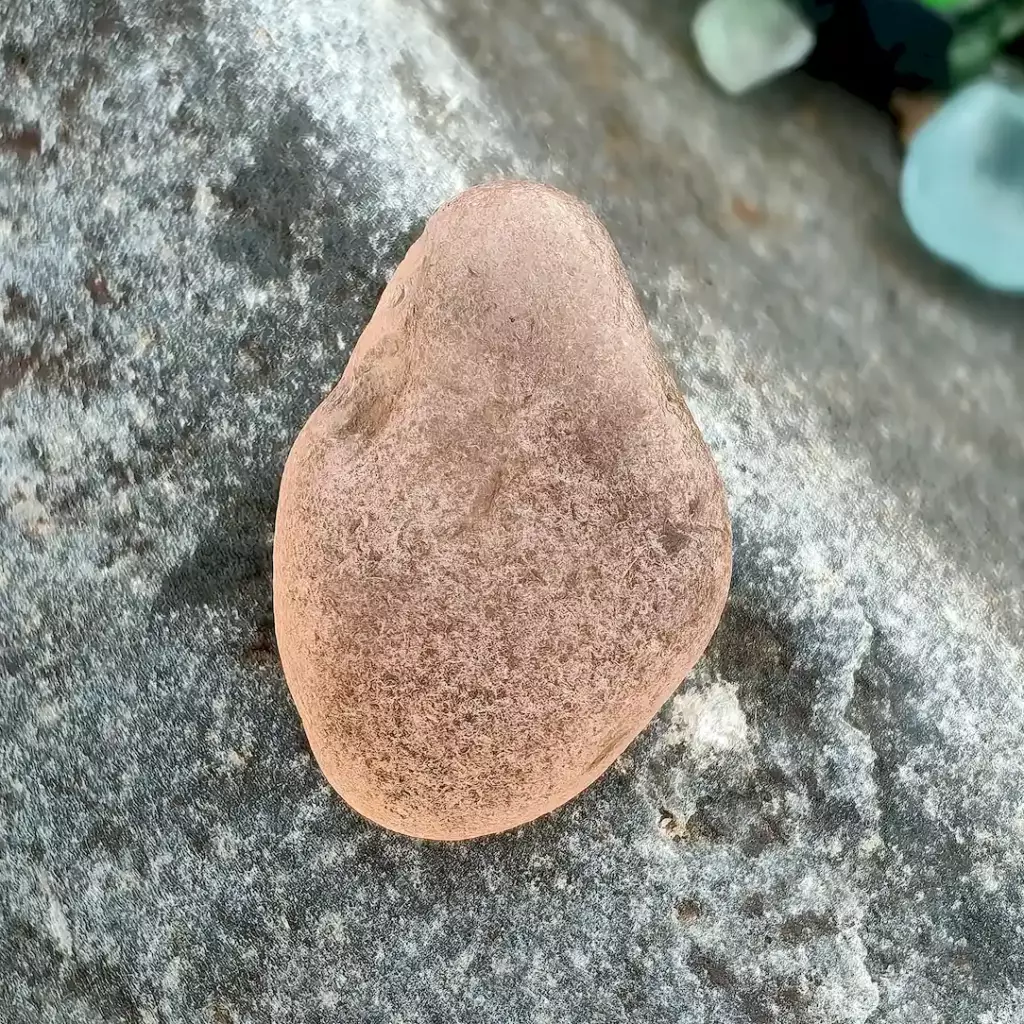
As explored in our comprehensive guide to The Science of Surf-Tumbled Sea Glass, the ocean does not merely smooth glass – it chemically alters it. The aggressive saltwater attacks the loose sodium particles within the glass framework, systematically washing them out and leaving behind a microscopic, porous structure. In premium Russian pink sea glass, which was originally melted as high-end, premium ware with highly purified ingredients, the resulting micro-voids are incredibly uniform. When dry, these cavities diffuse light perfectly, enveloping the soft pastel shades in a deep, heavy, ultra-matte frost.
High-Energy Suede Abrasion and Authentic C-Marks
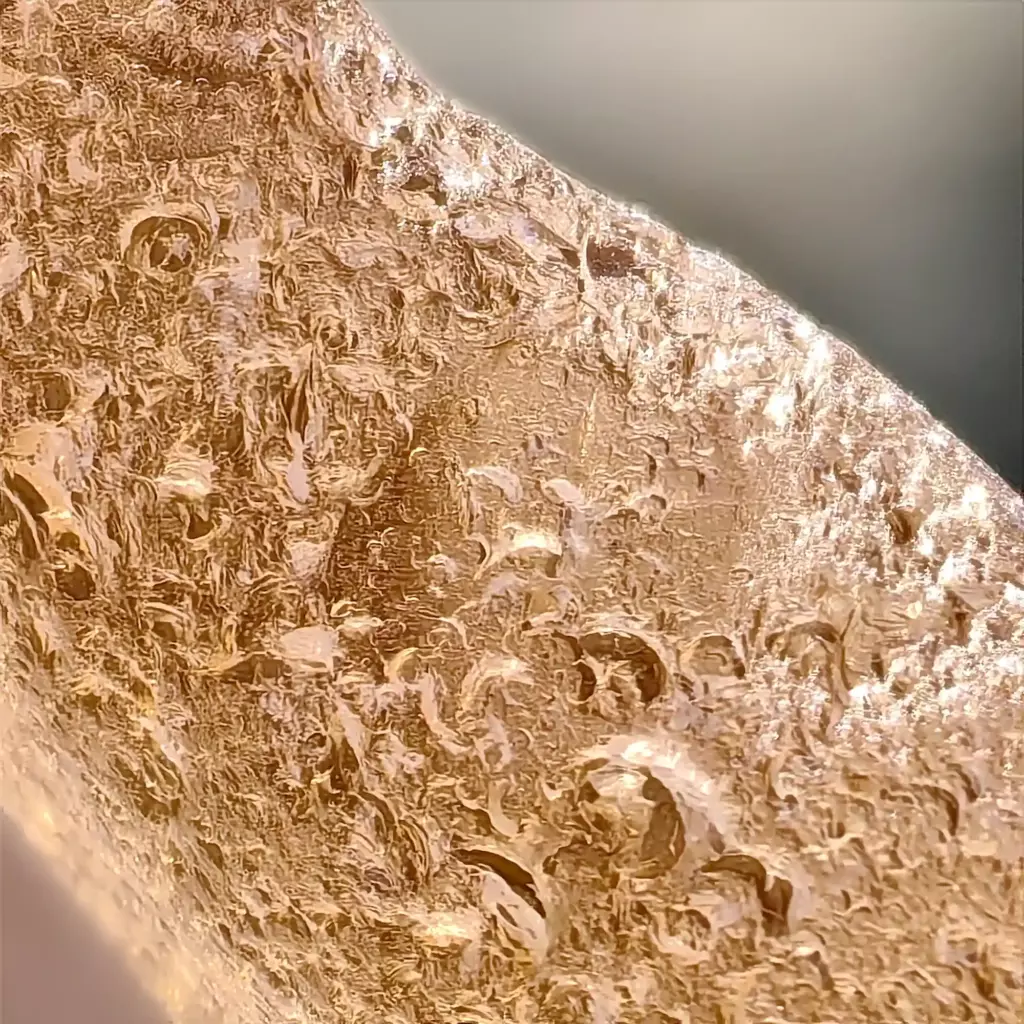
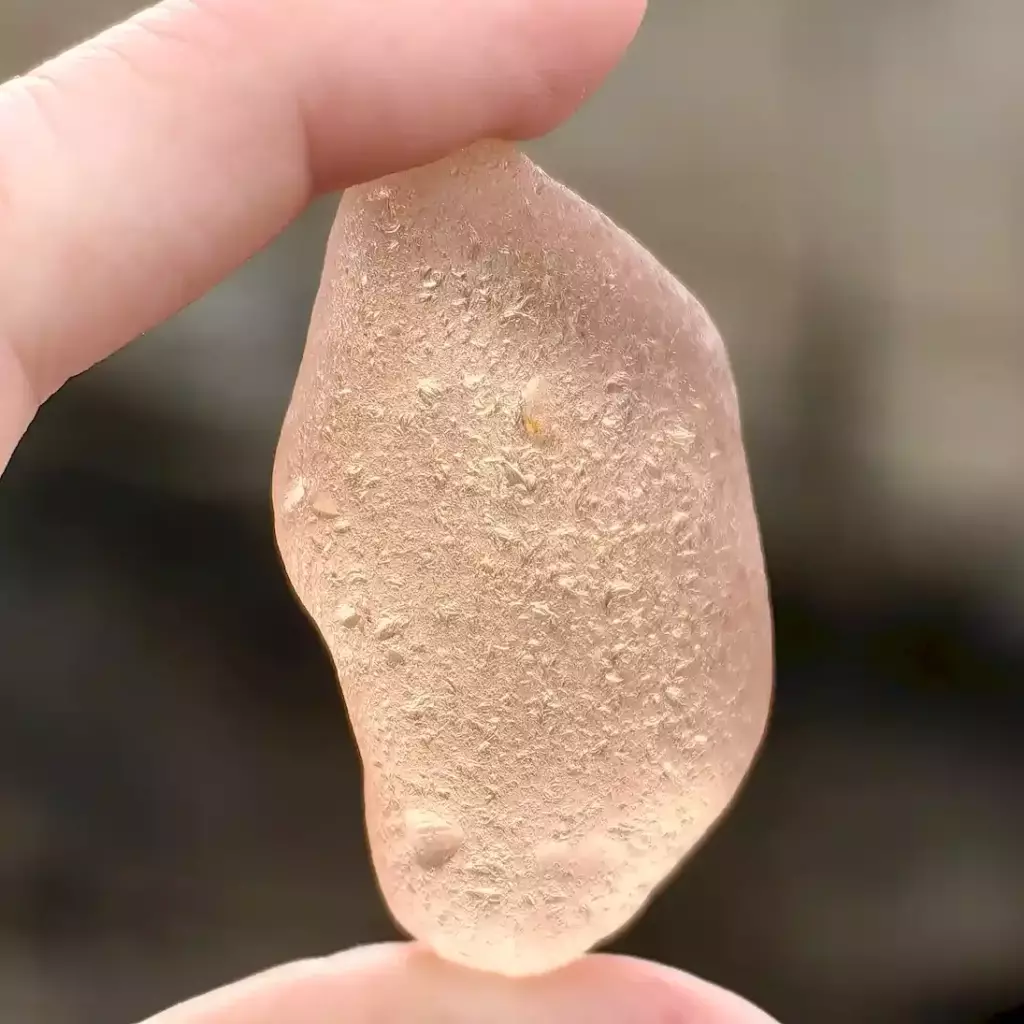
The volcanic sand of Ussuri Bay is mixed with a highly abrasive grit made of billions of tumbling glass fragments. The heavy surf relentlessly drives the volcanic sand into the surface, leaving behind dense patterns of crescent-shaped impact fractures known as C-marks. While sea glass from warm, sandy resort beaches often develops a smooth, semi-glossy satin finish, pink glass from Ussuri Bay features a thick, deeply tactile “suede-like” frost that feels unmistakably heavy and velvety to the touch. This multi-dimensional texture is a vital signature used in real sea glass validation, as it cannot be replicated by commercial machines.
Vanishing Heritage: The Extreme Scarcity of Rosaline Shards
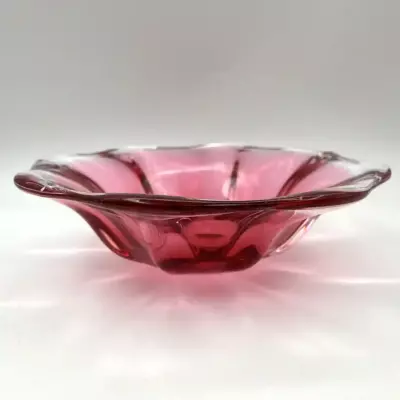
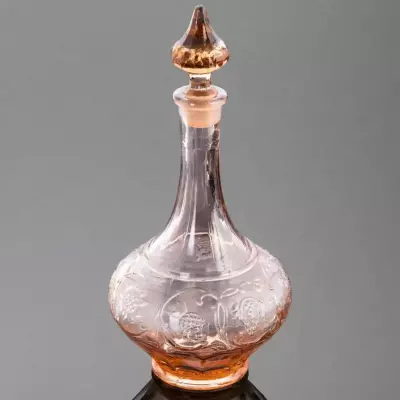
Vintage Soviet Rosaline glassware was never meant for ordinary, everyday use; it was meticulously crafted for elegant holiday tableware, delicate perfume atomizers, and celebrated family centerpieces. Every single find is a premium fragment of mid-century designer decor that spent over half a century being sculpted by the fierce Pacific surf.
With the beach’s old glass deposits fading fast, finding a large, genuinely frosted pink piece with its original historical shape is now incredibly rare.
This extreme scarcity has unfortunately led to a flood of modern counterfeits on the market – perfectly polished, multi-colored blanks of identical size and shape, passed off as ultra-rare discoveries. Some of these fabrications even feature forced, machine-made impact scars in an attempt to mimic genuine aging.
However, nature leaves a different signature. Genuine selenium pink sea glass never features a commercially “perfect,” symmetrical geometry, nor are the impact marks on its surface identical. An authentic piece always retains its unique, often asymmetrical proportions, carrying deep, chaotic, and layered C-marks carved by decades of actual ocean storms – a raw, multi-dimensional texture that cannot be replicated in a mechanical tumbler.
To claim your own verified piece of history before the tides sweep them away, feel free to explore our current discoveries below.
About the Author
Tatiana Japanseaglass is the founder of Japan Sea Glass with over 15 years of expertise in coastal geology and glass research. Based near the storm-swept shores of Vladivostok, she uses materials science to verify and bring authentic ocean gemstones to collectors worldwide.
